Sunday, February 11, 2007

The Four Hallows of the Holy Grail


As you may remember, a few years back I co-wrote a book called The Trials of Arthur, about an eccentric English biker who changed his name to Arthur Pendragon, and who has been living the life of a contemporary King Arthur ever since. The co-writer was Arthur Pendragon himself. It’s a true story.

What appealed to me at the time was that the man, Arthur, didn’t seek to adapt his lifestyle to suit his new name. He was a biker before and a biker after. He just assumed that, as he was Arthur, whatever he did was what Arthur did.

And indeed, in the process of researching the book, I discovered that he was exactly right. There were several different Arthurs in the historical literature, constructed to serve a number of different purposes, but the earliest Arthur, the Welsh Arthur - as discovered in the Lives of the Saints, The Mabinogion and The Welsh Triads - grubby and fierce and only half-tamed as he was, would have been completely at home on a biker roustabout, and bore more than a passing resemblance to the rough-riding ex-Hell’s Angel that I was working with.

Coincidence? Well maybe. But it makes you wonder what is going on here.

Arthur himself is convinced that he is the reincarnation of the historical Arthur, but in the process of writing the book I was careful to avoid this assertion, mainly because it is too easy to make, too commonplace, and, in the end, too mundane. It is impossible to prove, impossible to disprove, and therefore completely useless as an explanation for anything.

As I said in the book, if reincarnation exists, then we are all reincarnated beings. But what does that tell us? Only that we are capable of making the same mistakes over and over again. And, in any case, while I may indeed have more than one life, there’s only one Christopher James Stone, born of Mary and Eddy Stone in Birmingham in 1953, and once he is dead and gone he is dead and gone forever, never to return. In this sense, however many lives I may have had or hope to have, there is only one that matters: the one I am living right now.

The problem with reincarnation is that everyone with a claim to it always remembers themselves as some exalted being: as Cleopatra, or Napoleon or Admiral Lord Nelson, say (or as King Arthur Pendragon) never as an anonymous Mrs Mop, or a factory worker or a drudge. Which implies that in the past the world was completely populated by aristocrats and heroes, and not one ordinary working person. This is reincarnation as fantasy, of course, and is easily dismissed.

However, I must admit, being surrounded by a bunch of oddballs and crazies as I was while writing the book - all of whom claimed some historical precedence for their current existence - I did find myself fantasising about my own role in history.

This is what I came up with, one very drunken night in Glastonbury. I was Chretien de Troyes, I decided, the first poet to write about King Arthur in the medieval period, and the man who popularised the concept of the Holy Grail. I had never met Arthur in the past, but only written about him. Now I was meeting him for the first time and writing about him as well.

I was lying on a bed at the time of the revelation, in a drunken spin, while everyone else was upstairs, still partying. In Chretien the Holy Grail is not one object, but four, called “the Four Hallows of the Holy Grail”: namely, a grail-cup, a platter, a sword and a wand or spear, and as I burst into the upstairs room, wildly excited at my self-discovery, I looked about me, and there indeed, were the Four Hallows of the Holy Grail, leaning against the walls, or resting on tables, or in the hands of my drinking friends, marking out the four quarters. Arthur’s sword, a chalice cup, a circular silver tray full of wine glasses, and a wooden stave propped up against the wall.

It was a Druid household, and these are the paraphernalia of their spiritual practice, so it was not unnatural to find them in that room; but at the time it struck me as awesomely significant, and I fell on my knees and had Arthur knight me there and then, as the reincarnated chronicler of ancient Arthurian legend.

People said that my name should be Sir Cretin de Birmingham, marking both my mental state and my place of birth. Which will do.

The following day - ouch! - I might have regretted my drunken excesses, but the funny thing about me - and Arthur for that matter - is that we can both believe these things while disbelieving them at the same time. In any case, as the writer of a modern book about a modern-day King Arthur, that’s exactly what I understood myself to be: if not the actual reincarnated chronicler of Arthurian legend, then a contemporary version of the same thing. Not Chretien this time, but Chris.

Later, however, I went even further, and came up with a list of other names that I have been in past lives, including John Bunyan, Hans Christian Anderson and George Orwell. All writers, you will note. All men. Which only goes to show how unimaginative I am when considering these things.

Orwell died in 1950, which means that his soul must have been hanging round in the ether for quite a while before it entered me. Either that or there was a short interval life which only lasted three years. As for the others, it has something to do with the quality of their writing and their subject matter. In other words, is this really a literary exercise, with me merely picking out writers I admire? And doesn’t this illustrate what I was saying earlier, about reincarnation as fantasy?

Well yes. But then, what’s the harm in it? And the fact is, even if I wasn’t about in a past life, someone like me was.

I may not have been John Bunyan or Chretien or Hans Christian Anderson or George Orwell – who knows? - but all of them were mortal and human like me.

In the end, what does it matter? We live. We die. Life goes on. That’s all anyone can say.


The Trials of Arthur


by

King Arthur Pendragon

&

Christopher James Stone


Published Price: £12.99

ISBN: 0007121148

Published By: Element Books

Publication Date: 02 June 2003

Format: Paperback, 256 pages, 23.4cm height, Ill.

Category: folklore

Saturday, February 03, 2007

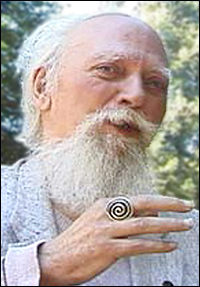
Obituary: Tim Sebastion 1947-2007

Click on the picture to enlarge.

copyright peteglastonbury@gmail.com
.
.
Fall of the Leaf
(Harvey/Sebastion, from "
Treason")

You call me friend but seldom listen
But in the end you always whisper
"Please-tell me what I'm doing wrong"
You stand alone in naked friendship
Among the mists the swirling leaves slip through

Trees they do grow high-my friend
The leaves they will grow green again
Recalling all the life you've seen
Life will ascend to the trees-the leaves become the queen
And help the spring to love you
And call you home again

In ember lane the leaf has fallen
You never hear the silence crawling through
The clambering and learning grew
There is no need to hang so heavy
Just look around and see the steady sky
That changes with remembering

To now the end that's always calling
To everything in autumn's warring sea
Crashing over you and me
But if we can just stand together
The leaves begin to turn neverland

Trees they do grow high-my friend
The leaves they will grow green again
Recalling all the life you've seen
Life will ascend to the trees-the leaves become the queen
And help the spring to love you
And call you home again

More lyrics available at: http://www.gaudela.net/gryphon/

A Picture of Tim


My friend Tim Sebastion is dead. He died on Thursday the 1st of February at about 8 o’clock in the evening.

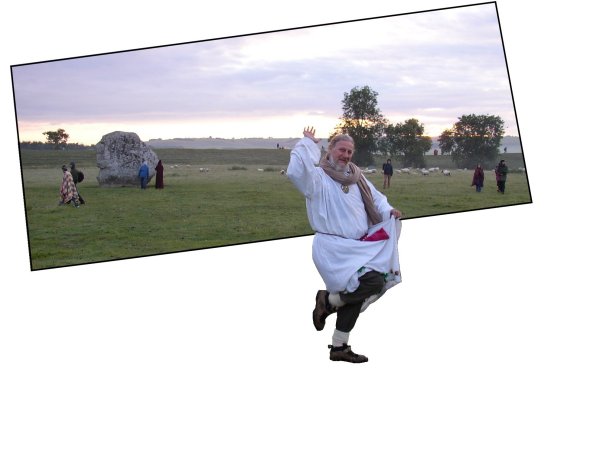
Typical Tim: a pagan to his last breath. He always knew how to make a dramatic exit. It was a glorious full moon, the night before Imbolg, the perfect moment for the founder and ex-Archdruid of the Secular Order of Druids to depart this life and to move on to whatever may await us next.

He was born in Southend-on-Sea in Essex on the 29th April 1947. He was brought up in a Catholic Monastery in Mayfield in Sussex from the age of 8 until he ran away at the age of 15 to seek his fortune in London, where he was a barrow boy in the East End. During the ‘60s Tim ran boutiques in both Carnaby St. and the Kings Road. He also opened his own stall in Portobello Road selling antiques, paintings and prints. In the early ‘70s he worked for the London Music Store in Great Portland Street where he was responsible for importing Melodiya Records from Russia. He was involved with the London hippie scene and knew many of the bands, including Hawkwind and the Pink Fairies.

It was during this time that he attended the first Windsor Free Festival in August 1971. He was amazed at the scene and became a regular at most free festivals from then on. In the mid-seventies, he started going to the Stonehenge festival. He always claimed to be an original Wally: that is, one of the associates of Wally Hope, who organised the first festival in June 1974. It was here, at the Stonehenge festival, that Tim must have seen his first Druids.

Who can say what drew him to them? In the early days of the festival the mainly hippie/anarchist audience were somewhat sceptical of the berobed and besuited, neatly trimmed and clean shaven figures who would drive in to Stonehenge on the morning of the solstice to do their rituals and then depart. In those days the Druids were definitely members of the establishment.

One of the jokes was that, as the Druids were intoning their incomprehensible, nasal mantras, the hippies would all chant back “ken barlowwwwwwwwwwwwwwe... ken barlowwwwwwwwwwwwwe” after the character in Coronation Street who was known to be a Druid and to attend these meetings.

So they were straight guys, middle-aged and middle-class. But then they were also dedicated enough to get up at some ungodly hour and to travel to the stones in time for the sunrise. And didn’t they, too, just like Tim and his compatriots, recognise the importance of the stones to the magical and cultural history of the British Isles? Weren’t they, too, caught up in the mystery of this place?

It took a few years for Tim to adopt the Druid ways, but the seeds of his later conversion lay in those early days: in watching the mysterious strangers in their robes and hoods, with their sickles and their staves and their oak laurels, processing into the stones to perform their arcane ceremonies.

It was also around this time, that Tim decided to move out of London – to “go west young man” – in the spirit of magical adventure, certain that out here, in the mysterious and still superstitious regions of the west country, he would find his true destiny at last.

He opened an antiques shop in Bradford-on-Avon. Later he joined the folk rock band Gryphon, as the lyricist, with whom he made two albums and six singles. (http://www.gaudela.net/gryphon/)

It was during the making of their last album that he first heard the Sex Pistols. They were working down the hall, a just few doors away at the same studio, making the notorious and never-to-be-forgotten Never Mind The Bollocks.

That noise! That sound! It was an instant conversion.

He became a fan of punk music and a friend to many of the aspiring west country groups, including the Subhumans, considered by many to be one of the greatest of the British punk bands.

So how did he become a Druid?

He used to say to me that one day he planned to write a book called How To Be A Druid.

He said, “first of all you have to go to school in a Catholic Monastery. Then you have to run away to London and open a boutique...”

In other words, he saw the whole of his previous life as preparation for his Druidic role.

But undoubtedly partly it was a political response to the establishment attack upon the festival, which was shut own in a storm of police-led violence in June of 1984.

The Druids had a customary right to perform their ceremonies at Stonehenge at the solstice. Everyone had a customary right to freedom of worship, to freedom of movement, and to freedom of assembly. So why not: why not become a Druid? Being a Druid meant standing up for the rights of the British people to worship where they liked, and how they liked and in whatever manner they liked.

It was a political as well as a spiritual decision.

And so he set about creating his own Druid order, the Secular Order of Druids, sometime in the late eighties.

Typical Tim. Always a prankster. Read the acronym. It was a brilliant joke. But also, by giving it that name, by underlining its secular nature, he was making a political and a spiritual statement, about his reasons for making this move.

Secular, meaning not religious. Secular, meaning concerned with worldly as opposed to other-worldly things. Temporal. Down to earth. Mundane.

It’s a statement about the nature of true spirituality, and a reminder to all of those who would be likely to follow him not to try to make a religion out of it.

Just in case he got too pompous himself.

Not that that was ever likely. Tim was just about the least pompous man I ever met.

What I remember about him most was his grumbling voice, his booming laugh, his ribald and unrestrained sense of humour, and his ability, almost stretching to genius, to knock over any ashtray, any pint, any table or any tent that he was even vaguely associated with.

When Tim had an ashtray it was a purely symbolic item. No ash would ever stay in it. You might as well have told him, “just drop it on the floor,” because that’s where it would all end up.

This was the reason I referred to him in my book, The Last of the Hippies, as “the most completely useless person I have ever met”.

To quote, from Chapter 13, The Trouble With Hippies:

I had Tim with me. I like Tim. He's the most completely useless person I have ever met. Every time he puts up a tent, it falls down. If he has a drink he spills it. If he flicks his ash at the ashtray, the ashtray goes on the floor. Then he'll tread in it too....

“Actually I'd said that to him at the time. I'd said that he was the most completely useless person I'd ever met. We were sitting in the van at the Big Green Gathering, Tim and I, with a pint of that potent cider in front of each of us, smoking fags and chatting, when Tim flicked his cigarette at the ashtray. The ashtray was already surrounded by fag-butts and ash where he's missed it previously. He missed it again, but caught it with his knuckle in the process, and the ashtray went on the floor. He lent over to pick it up, and knocked his drink over. I said, ‘Tim, you're the most completely useless person I've ever met.’ And he laughed, his booming great laugh.

“So that was Tim, Doing His Own Thing. Knocking over ashtrays.

“He told me that he thought the hippie movement was like the Romantic movement of the early 19th century. And that's what Tim is really: an old Romantic
.”

Later I found out that Tim had been upset by this description, so I would like to amend the record now. Tim was not useless. He was a tireless fighter for justice, an inspiration to us all, a model of courage and conviction, funny, generous, honest and a truly decent person to boot. Having Tim chant the Awen over you was to be transported to another, better world.

He was only useless when it came to knocking over ashtrays.


But actually, even this was endearing. I mean, no ashtray or cup or pint of beer was safe in his vicinity. But this was because he was always so engaged in conversation, so entranced by the person he was speaking to, that these ordinary objects just failed to hold his attention. So he would forget about them, and knock them over. It meant he cared more about people than he did about objects.

So here’s to you Tim, wherever you are. I’m sure you’ve already made a lot of new friends.


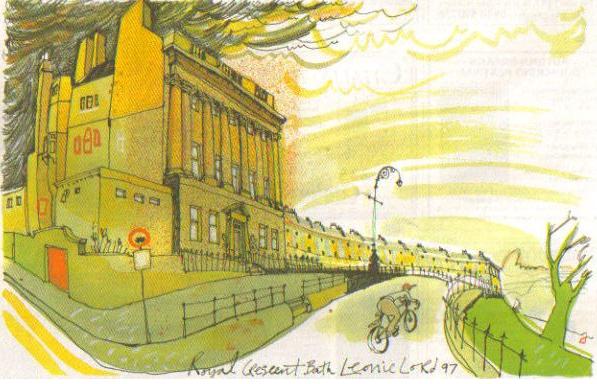
Following are two stories I wrote about Tim. The first is from the Guardian Weekend, featuring a certain pub in Bath. The second story is an excerpt from The Trials of Arthur, featuring a Morris Minor, a druid's staff, a young couple and too much alcohol.

In Memorium: Tim Sebastion


CJ Stone’s Britain

Guardian Weekend Travel

20th September 1997

Regency Stoned

Every city should have a Kaiser Bill to keep the dope-smokers off the streets. The other drug on offer is scrumpy


There’s probably not a lot I can tell you about Bath that you don’t already know. There are dozens of books on the city, and it’s one of the most visited tourist attractions in the country.

Deservedly so. It’s an elegant, ornate, civilised city, well planned, well proportioned, well built, a perfect example of the art of 18th century architectural design. Bath is a city built for people to live in, the way cities ought to be, full of trees and surrounded by wooded hills.

What makes my take on the city somewhat different is the fact that I’m being shown round it by an Archdruid....


http://hubpages.com/hub/CJ-Stones-Britain-Regency-Stoned-Bath

Fourth Quest: Lammas


It was becoming a saga, a tale of true epic proportions. CJ was still looking for King Arthur. This was going to be his last effort. He was heading for Avebury once more on the morning of the 3 August, 1996. That's close to Lammas, for all you students of the pagan calendar, the pagan Harvest festival. He picked up a couple of hitchhikers on the way, on an obscure road in Kent. They'd slept in a field, having arrived from Germany the night before. They were on their way to the West Country. One was a hippie musician called Clive. The other was his German girlfriend. Her name was Birghit. They were very much in love. They kept stroking each other and looking into each other's eyes. But Birghit could make head nor tail of CJ's accent. He said, 'D'ya fancy a cuppa?' and she looked at him as if he'd just made an immoral suggestion.

They arrived in Avebury at 1.00pm, about half an hour after the ceremony was due to start, but Clive wanted a pint and so did CJ. They had a pint of Fruggles each. They chose it for the name. It was Clive's first English pint in over a year and you can't get a much more English sounding pint than 'Fruggles'. Clive drank his down in with liquid ease, making appreciative gurgling noises as he did so. CJ said, 'Well, we've not got much else going for us. The worst licensing laws in the Universe. And the most corrupt and dishonest government. But we still make the best beer.' Clive didn't answer. He was too busy making gurgling noises.

They went over to the stones. There was a hand-fasting ceremony taking place. A hand-fasting is a pagan marriage. It lasts for a year and a day. So much more civilised – not to say, realistic – than a lifetime. You re-confirm it every year. Or not, as the case may be.

CJ saw his friend Steve Andrews.

CJ said, 'Is Arthur here then?'

Steve pointed him out, and CJ went over to make his greeting.

'We meet at last,' he said.

'You look different without your beard,' Arthur said. Those were the first words that passed between them. It was a moment of great significance in the history of Western culture. Pretend writer meets pretend king. New Age Livingstone and drink-addled Stanley in the wilds of ancient Wiltshire.

CJ was very much struck by his appearance. He definitely looked like King Arthur, he thought. It wasn't only the robes and the cloak and the beard. It wasn't the shield either, nor the stave wrapped about with copper wire with a crystal on the top. Arthur has a huge brow, like some prehistoric tribesman, on which was perched his kingly circlet, made of iron with a dragon at the forehead. And he had long, dark pointy ears and a strange darkness about him. There was an indefinable blackness under the pale skin, as if the flesh itself was soaked in engine oil, thought CJ. But he couldn't see the sword. 'Where's the sword,' he asked, and Arthur brought it out.

'It's beautiful,' CJ said. And he meant it. It was beautiful.

After that they had the ceremony. They stood in a circle while a Druid in a wolf-skin cloak took to centre stage. It was exactly like that: as if he was performing for everyone on stage. Four Druids stood at the four quarters and made ritualistic gestures and intoned ceremonial phrases. There were obeisances to the guardians of the salamanders of fire – stuff like that. CJ wasn't at all sure. Arthur raised his shield and his sword and intoned to the Guardians of the South. CJ was struck by his accent. Pure Hampshire. A Celtic King from Hampshire: it's a contradiction in terms.

After that, a circle of children were blessed by the Priestess. Steve said that he'd been blessed as a child on one occasion. Someone wanted to know if they'd allow blessings of ferrets. So they did, and Frodo the Ferret was blessed too, along with all the kids. Meanwhile people were singing:

The river is flowing
The river is growing
The river is flowing
Back to the sea.
Mother Earth carry me
A child I will always be
Mother Earth carry me
Back to the sea.

It was a nice song. It went on for about 10 minutes, over and over.

Steve said: 'I arrived here last night. I had to walk from Chippenham. I slept by that stone over there and woke up soaked in dew. But I spotted 14 types of butterfly this morning.' And he brought out a list. 'That one there, Clouded Yellow, it's very rare. People would come from all over the country to see it.'

CJ spotted another name on the list. 'Hmmm, Painted Lady,' he said, 'that sounds nice. I could do with a Painted Lady.'

'Yes, very attractive,' said Steve, thinking that CJ was referring to butterflies.

There was a squabble amongst the Druids. The Druid with the fur stole had apparently forgotten a part of the ceremony. A Druid with a Panama hat (Rollo, again, but CJ didn't know it yet) interrupted him. 'You haven't consecrated the flowers,' he said.

'Oh, all right then,' said the other Druid, tetchily, 'go ahead if you have to.'

So, the Druid with the Panama hat stood over a bunch of flowers and consecrated them.

After that, they were invited to become initiated as Bards of Caer Abiri if they wanted to. Tim Sebastion – who CJ had met before, both at Avebury and Stonehenge – urged him to go. 'Go on CJ,' he said, 'it won't hurt you.'

'Oh all right then,' CJ said, and he did.

They made a much smaller circle inside the larger circle, but facing outwards. They made a vow to honour and justice and peace and love, and to care for the Earth. It was a moving moment. You see, CJ already believed in honour and justice and peace and love, and he wanted to care for the Earth. He'd just never made vows about it before. And then they were sponsored by an existing initiate. CJ was sponsored by Tim Sebastion. Tim Sebastion being an Archdruid, that was an honour. He placed his hand on CJ's shoulder and everyone chanted 'Awen.' It was said as a drone, the way that Buddhists chant OM: 'A-a-a-a-a-a-a-a-w-w-w-w-w-e-e-e-e-e-e-n-n-n!' The chant drifted and spiralled, rose and fell, and sparkled like diamonds in the shimmering air, while above sprays of birds arched across the sky.

CJ thanked Tim for that. It had felt genuinely sweet in that circle.

Steve Andrews went into the circle and sang 'Stand By Me.' Only no one did at first. Eventually Arthur joined him and one or two others. Then he changed the lyrics. He sang, 'Dance By Me,' and a few more people did. King Arthur was dancing marionette-like in his robes. It was a moment of startling illumination. King Arthur, the Rock'n'Roll King.

Then the five main Druids went into the circle: that is, the Druids of the four quarters and the one with the fur cloak. They had to vow not to squabble any longer. You see: the Druid movement is split between those who will consecrate trees, but never get up a tree to defend it, and those who will both consecrate and defend the trees. There's also a class division: between the one's who organise Spirit Camps and charge for it, where people gather to increase their spiritual awareness and learn about the ancient Druidic ways, who never drink or smoke or chase women; and those – led by Arthur – who do all of these things and never go to Spirit Camps and whose motivations are fundamentally political and radical.

One of the Druids read from a book. He said, 'There has never been a tradition of holding hand-fastings at those particular stones.'

And Arthur shouted back, 'Then we'll start a tradition.'

CJ turned to Birghit and Clive. 'See, aren't you lucky today? I picked you up in the far East of England, and brought you all the way to the West, where you wanted to go. And on top of that I brought you here to witness a Druid ceremony. There can't be all that many people who get lifts to Druid ceremonies.'

Steve came over to join the group and CJ introduced them. 'This is my mate, Steve. And these are my hitch-hiker friends, Clive and … er … I can't remember your name.'

'Birghit,' she said in her heavy German accent.

'That's right, Beergut,' CJ said.

'No Birghit,' said Clive.

'Beergut.'

'Birghit.'

And that was the last time CJ tried to say her name.

Well, there's only a certain amount of standing in circles and chanting and ritual observances a man can take before he starts to get thirsty. The Red Lion was calling. Steve and CJ slipped off to get a couple of drinks. Arthur followed a little later. 'Buy us a drink,' he said. CJ agreed. But people were lined up three deep at the bar. CJ said, 'Wait ten minutes, OK? Or, barring that, here's a tenner, get one yourself.' Arthur looked at the money as if it was poison. 'I'm a renunciate,' he said. 'I don't handle money. Not unless it's for petrol, that is. Then it's not money it's petrol.'

'Well this is for beer. So it's not money either, it's beer.'

But he didn't want to touch it. He drank CJ's beer instead, and smoked several of his cigarettes. He called it tax. They sat in the pool room and made conspiratorial plans.

Arthur said: 'I want to get arrested, only nobody dares do it. The last time, at Stonehenge, all the coppers were standing round wondering what to do. They couldn't arrest me. They had to call a Superintendent to do it. And then I arrested him, in the name of the Law. I told him, "I am the LAW." They won't put me in gaol either. They keep fining me. I tell them, "I'm a Renunciate, I don't have any money." Then I go to the back of the Court, and they um and ah and we make our deals, and they let me go. It's the same every time.'

'I have three personalities,' he added, 'to go with my three names. As a King I have to be concerned with the welfare of my Knights, and as the Pendragon of all Britain I have to be concerned with the state of the country: but as Arthur I can get pissed and smoke and chase women and do what I like. But, obviously, Arthur comes second to the other two.'

'So which are you now.'

'I'm Arthur, of course,' he said, taking another swig on his cider and pinching another cigarette.

CJ asked Arthur to knight him. He went down on his knees in the pub yard and Arthur placed his sword on CJ's head and shoulders in a dramatic fashion, swearing him to truth, honour and justice. Then CJ stood up and Arthur embraced him.

After that things started to get really strange.

Tim Sebastion came out very agitated. 'I've had it with your fucking Warband,' he said to Arthur. 'Orc has just gone off with my tobacco.' He was so angry that he took his staff (which had a crescent moon on the top), laid it on a step and stamped on it. It broke with a healthy-sounding crack. The joke here is that Tim regularly breaks his staff and then bandages it up with a pink scarf in between. So, he wasn't really breaking his staff. He was making a dramatic gesture.

Arthur went and got the Orc, a tall man in a long white robe, with a stud through his lower lip. Arthur made him apologise to Tim and give back his tobacco.

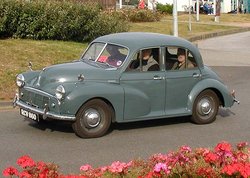
Then they drove to Bath. There was Steve, CJ, Arthur, Tim and the young couple in the car, along with all the Druidic paraphernalia – the shields and swords and robes and staves. It was a Morris Minor. It was very crowded. CJ was drunk and shouldn't have been driving. The car was swerving all over the road. Steve and the young couple were saying, very politely, 'Careful you don't kill us, we don't want to die yet, we're much too young to die,' while Arthur and Tim were shouting, 'Yes, go on, go on, kill us. Kill us now. We want to die!'

CJ didn't care one way or the other.

Arthur said, 'One of the reasons people hate me is that they all think I want to bonk their girlfriends.'

CJ said, 'Well, you can't bonk my girlfriend.'

'Listen to that,' Arthur said. 'Did you hear that everyone? He's questing me. He's offering me a challenge. You know I can't turn down a challenge. I'm really gonna bonk her now.'

CJ omitted to add that the reason that Arthur couldn't bonk his girlfriend was that he hadn't got one.

They all ended up in a pub drinking scrumpy cider. The young couple were very sweet. CJ kept telling the girl how sexy she was and then telling the man that he was very, very lucky. 'I know,' he said. Later, he found out that the girl was only 16.

CJ doesn't remember much more. They got back to Tim's house somehow, which seemed like a vast stately home. There was a huge hallway and antique furniture on the landing. CJ lay down in someone's bed until Tim came and got him. Then he lay down in the living room and went to sleep overhearing the young couple saying, 'And you know what CJ was saying to us in the pub? …' He was far too gone to listen to any more.

The following day he woke up and his hair was all standing on end. He looked very strange. He was still drunk. He drove Steve down to the bus station and they had some breakfast. After that CJ was going to go back and pick up Arthur so he could drive him to Newbury. Only they got lost in Bath. They were going round and round on the one-way system and CJ's petrol tank was nearly empty. He decided to give up trying to find Arthur again and they went back to wait for Steve's bus.

'What's Arthur's real name?' asked CJ.

'John,' said Steve and laughed. 'My friends are always changing their names. So Arthur was called John, and then he was Mad Dog and Bacardi, and now he's King Arthur. And my friend Pixi is really called Neil, but then he called himself Mordred and then Less Dread. He won't let anyone call him Pixi any more. It's very confusing. And Orc is Steve, and Llewch is Neil. It's such an ordinary name: Neil. Not as interesting as Llewch Lleawg.'

CJ said, 'Arthur is very vain isn't he? I suppose you'd have to be vain to want to call yourself King Arthur.'

'It's his true Aryan nature,' said Steve.

'Pardon?' said CJ, suddenly worried. 'But he's got black hair. I thought Aryans were supposed to be blonde.' He didn't like how this conversation seemed to be going. He'd never thought of Steve as a fascist.

'No: I mean Arian. He's an Aries.'

'Thank God for that,' CJ said, 'I thought you were going to start feeding me Nazi propaganda for a minute there.'

Steve lent CJ some money so he could get home. He'd spent most of his money in the pub the previous night. That's the trouble with wanting to write a book about people: they all expect you to buy them drinks. Then Steve caught his bus. CJ drove back along the M4. It was a very boring drive and he was hungover, irritable and with a tongue that tasted like he'd been licking the inside of a dog's bottom all night. He had no money left once he'd bought the petrol, so he couldn't stop anywhere. And then, about 20 miles of his home, he ran out of petrol again. He just managed to make it into a service station. He was going up to people and saying, in his most polite voice: 'Excuse me, I don't normally do this sort of thing, but you see, I'm nearly home. You couldn't let me have a couple of quid to buy petrol to get me the rest of the way, could you?' And it happened every time. They'd look him up and down, their eyes resting on his legs for a moment. He was wearing shorts. It was a glorious summer's day. But it was as if they were measuring his worthiness by the quality of his legs. And then a slight smile would play about their lips. 'Sorry,' they'd say, 'got no money.' It was humiliating.

Eventually he lost his patience. A camper van drew in. CJ marched up to the man and said, 'Give us a quid will you?'

'What for?'

'For petrol.'

'That's a new one,' the man said, laughing, and he reached in his pocket and brought out a pound, which was just about enough to get CJ home.

Well he couldn't help reflecting on this. He couldn't help remembering all those times he'd leant people money without ever expecting it back. In CJ's world, people help each other. Some people blag. Some people beg. Some people would talk the hind legs off an orang-utan for a pint or two. But people always help each other. But now he was beginning to see that in the real world, this world of motorway service stations and soulless Little Chef cafés, the opposite was true. No one blags, no one begs, no one talks and no one helps each other either.

Later, when he got home, he was watching The Blob on the TV. He was lying on the settee, exhausted, watching this little, flickering, black-and-white thing in the corner. The film is about a strange amorphous mass which is growing and swallowing everything in sight. A young man (played by Steve McQueen) is trying to warn people about a nameless horror which is about to consume their town. Nobody believes him: until they get eaten by the Blob, that is, by which time it is too late. The young man's name is Steve Andrews. Another little coincidence. CJ thought about his own friend Steve Andrews then. He thought about the Druids, and Arthur, at that point closely involved in the Newbury bypass road protest: how they were all warning us of a strange amorphous mass growing in our midst, threatening to consume our world. But it wasn't only a physical mass. It wasn't just a physical blob. It was a mental thing, a state of mind. An attitude. Something, even now, threatening to destroy our world.

What was it?

Money.


(Following is a proposal Tim and I made to the BBC for a possible Radio series. It is mostly Tim's work. All of the research is his. It's a pity the BBC never took us up on this as it would have been a fascinating series. I include it here as it is essentially autobiographical. It tells you as much about Tim, about his life and loves, as it does about the subject....)

More About Tim

THE ROAD OF EXCESS


A Musical Magical Journey down the Great West Road


by

CJ Stone & Tim Sebastion


And they felt old muscles travel
Over their tense contours
And with long skill unravel
Cunningest scores
.”
Thomas Hardy.


From inner space to outer space, from ley lines to space-time, from Stone Age to Space Age, human beings have always sought to discover the sacred music of the landscape, and to express their feelings in ritual, in rhythm, in poetry and song.

CJ Stone and Tim Sebastion take a musical/magical journey from London to Bristol down the old Pilgrim’s Route, the Great West Road, In Search of Space and of a generation on the move, talking to poets, artists and musicians along the way about their relationship with the historic landscape that spans this most ancient of roads. At each stop we will tell the musical and curious history of the places we see, observing the rituals and listening to the tales, travelling by car, public transport, on foot or by horse-drawn carriage, visiting churches, pubs, cafes and people’s homes, stopping by hills and rivers, walking along forest tracks and droves, in an ever changing landscape, with a musical soundtrack spanning classical and jazz, folk, rock and reggae.

Summary.

Tim was born a Cockney and spent much of his teenage years during the sixties in the Notting Hill and Shepherds Bush areas of London: which is where we will begin our tale, by examining some of the music and events that formulated Tim’s decision to “go West, young man”. Interviews would include: John Michell, guru of sacred geometry and father of the philosophy of the hippie movement, the organisers of the Notting Hill Carnival, the Pink Fairies and Nick Drake. We would also look into the legend of London’s lost Stonehenge and at the history of the hippie flowering in London, and at its demise with the birth of punk. Possible interview with Joe Strummer of the Clash.


We start the next section by taking a small detour to Windsor, where we will explore the early history of the festival movement. Interviews with some of the people involved, including Syd Rawles, self-styled King of the Hippies, Brig Oubridge, Green Gathering organiser and Green Party activist. Song from As You Like It, poem from The Merry Wives of Windsor, interview with Wild Hunt Morris.

Back on to the A30 passed Basingstoke (home of the ancient Tribe of Basa), and on to Andover, where we will meet Reg Presley of the Troggs to talk about the Troggs, the town and Reg’s interest in crop circles.


The next section begins at Amesbury where we will visit the site of a “Black Magic” temple and the Catholic Rectory, where we will meet Canon Thomas Curtis-Heywood, who took in the Wallies of Wessex in 1975, when Tim came to join them. Talk about the Wallies. Who they were, and what they can teach us now. Also talk to some locals about this period and to some of the musicians who were recording at the town studio at this time.

From there we will travel to Stonehenge to investigate the festivals, Druidic rites and hear some of the music that has been written about this most ancient temple. Talk to some involved in the Stonehenge campaign, including King Arthur Pendragon, self-styled Dark Ages Battle Chieftain and Pagan Priest. What now for the future of Stonehenge?

Interview with Penny Rimbaud from Cr@ss.


After this we take another detour to Salisbury to discover the old tune to the Salisbury Giant and uncover its real history. Interview with the local choirmaster of the Abbey and delve into the history of the famous Madrigal composer Thomas Weelkes. Poem by Betjemen, references to tracks by the Levellers and Kula Shaker.


Next we move on to Warminster.

When approaching Warminster look out for UFOs. There was a plague of them in the sixties. We will meet people who have vivid recollections of these mysterious happenings, said at the time to be communications from the Planet Xenestria.

Warminster is also the centre of ley lines and the birthplace of one of Britain’s greatest Punk bands, the Subhumans, who we will seek out and interview.

Then on to Longleat where one of the first great outdoor festivals took place, headlined by the Rolling Stones, and the scene of an early pop riot. On to Frome, an old West Country market town where the famous cheese blessing takes place and site of the infamous cucumber dance. Archive recordings of dance and blessing. Meeting with the Rhythmites, Frome’s most famous band.


The next part will start in Bradford on Avon in the oldest Saxon church in England, where we will meet with members of Jesus Jones, who were born and raised in the town. On to Troughbridge, home of the Village Pump festival, where we will talk to some of the people involved in this most English of English folk festivals. Also home of Dave Dee Dozy Beaky Mick and Titch, whom we will interview. On to Box to interview Hugh Cornwall about his move to the area.


The final part finds us in Bath, home to so many famous artists, including Tears For Fears, The Korgis, Peter Gabriel and Van Morrison, some of whom we will interview.

Although Bath is famous for a number of internationally recognised festivals, we will concentrate instead upon the lesser known Bardic festival held in December, interviewing some of the Bards involved.

Discover the famous Irish song written here, meet the Astronomer who wrote symphonies.

Finally on to Bristol via Stanton Drew - where it is said that a whole marriage party was turned to stone by the Devil. In Bristol we will talk to some of the stars that hail from the city (such as Massive Attack, Russ Conway and Portishead) and then talk to the organisers of the St. Pauls Carnival, second only to Notting Hill as one of Britain’s foremost West Indian street entertainments.

End looking across at the open spaces of Wales, and think about what lies beyond: Ireland, the Atlantic and the United States.

Possible interview with Nik Turner of Hawkwind about his move to Wales.

Sunday, January 28, 2007

Breath


"For we are born at all adventure: and we shall be hereafter as though we had never been: for the breath in our nostrils is as smoke, and a little spark in the moving of our heart". Wisdom of Solomon 2:2


Some of my readers may know that aside from this blog I also write regularly for Prediction magazine. Indeed, some of you may be Prediction readers checking out the blog after getting the address from the magazine. In which case: welcome. I hope you enjoy yourself here.

Last week the Prediction editor, Marion, asked me for my “spiritual credentials” so that she could put them by my by-line.

Um, pardon?

I didn’t quite know what she meant by that. What are spiritual credentials, exactly? I mean: is there a spiritual university out there somewhere, with a spiritual qualification on offer? Sort of BA (Hons) in Divination and Tarot Reading or a Higher National Diploma in Meditation Practice and Standing On One Leg? Is God marking my prayers? Three out of ten for effort. Must Try Harder. Are there letters I can put after my name? CJ Stone, Dip Ast Proj (Diploma in Astral Projection)?

Personally I would be very wary of anyone attempting to make claims about their spirituality; it would almost certainly turn out to be a fraud.

In the end I sent her the following mail.

“I'm a Brother Knight, a Quest Knight and a Shield Knight of the Loyal Arthurian Warband, a Druid order: the only person, as far as I know, to have gone through all three stages.


”I’m an observer and commentator on all things New Age; a dreamer and psychic explorer of many years standing.

”I practice Taoist standing meditation and Chi Kung daily.

”I'm a follower of Dharma, which means, ‘correct behaviour’, ‘the right way of living’, and also ‘the Way’; of the Tao, which also means ‘the Way’; and a student and devotee of early Christianity, one of whose names for themselves was ‘the Way’.

”The early Christians also called themselves ‘the Poor’, which was a spiritual identification with the nationhood of the poor, the largest country in the world.

”I think the most spiritual thing any of us can do is to get born.

”My spiritual gurus are William Blake and Robert Anton Wilson.”

I have yet to find out if she used any of this information, and what, exactly my spiritual credentials will be when they appear next to my by-line on my column.


Actually, I must admit, I’m not even sure what the word “spiritual” means.

My Collins English Dictionary defines it as: Spiritual (adj.) 1. relating to the spirit or soul and not to physical nature or matter; intangible. 2. of, relating to, or characteristic of sacred things, the Church, religion, etc. 3. standing in a relationship based on communication between the souls of the persons involved: i.e. a spiritual father. 4. having a mind or emotions of a high and delicately refined quality. 5. (often plural) the sphere of religious, spiritual, or ecclesiastical matters, or such matters themselves. 6. the realm of spirits.

On that basis, I have to say that I have no spiritual credentials whatsoever. I prefer tangible things to intangible ones. I am not religious. I am nobody’s spiritual relation, whether father or mother or cousin or any other thing. My mind and my emotions are not in the slightest bit refined. I am not interested in ecclesiastical matters, and I have no experience of the realm of the spirits.

The word “spirit” however, is closer to something I can understand and sympathise with.

Here is the definition.

Spirit. n. 1. the force or principle of life that animates the body of living things. 2. temperament or disposition. 3. liveliness, mettle: they set to it with spirit. 4. the fundamental, emotional and activating principle of a person; will: the experience broke his spirit. 5. a sense of loyalty and dedication: team spirit. 6. the prevailing element; feeling: a spirit of joy pervaded the atmosphere. 7. a state of mind or mood; attitude: he did it in the wrong spirit. 8. (pl) an emotional state, esp. with regard to exaltation or dejection: in high spirits. 9. a person characterised by some activity, quality of disposition: a leading spirit of the movement. 10. the deeper more significant meaning as opposed to a pedantic interpretation: the spirit of the law. 11. that which constitutes a person’s intangible being as contrasted with his physical presence: I shall be with you in spirit. 12. a. an incorporeal being, esp. the soul of a dead person. b. (as modifier): spirit world. 13. (usually followed by away or off) to carry off mysteriously or secretly. 14. (often followed by up) to impart animation or determination to. [C13: from old French esperit, from Latin spiritus breath; related to spirare to breathe.]

This is the sense in which I always use the word spiritual (wrongly it seems) not to mean religiousity, but as a form of energy, like Chi, perhaps, in Chinese philosophy; as the animating principle of life, and the essence, as it were, of a human being. When I say “spiritual” I usually mean energetic. I am referring to a sparkle in the eye, a tickle in the belly, a turn of the lips, a sense of humour, a feeling of optimism and purpose: a reason for being.
The people I consider most spiritual are usually also the most down-to-earth.

I think the sense of the word I've been using has more in common with "spirited" than "spiritual". It's just a pity spiritual people can't be a little more spirited in their dealings with life, a little less refined and ecclesiastical.

I was particularly interested in reading it’s derivation, from the Latin spiritus meaning breath, since I had a dream recently which has got me thinking very deeply about the meaning of existence.

In the dream there's a down hill slope and snow and a sledge and children playing and as I sweep past them laughing I say, something like, "it's all right, I'm not going to enslave you like they did in Rome." There's a whole heap of stuff in that statement, to do with the future economy and the next image comes up as a sort of explanation of it. In my mind I'm talking about the economic system. “There are slave economies, like Rome, which is essentially our economic system,” (I say) “but in the past there were other kinds of economies too.” Then there's a picture of a market with people exchanging things and a voice says, "in the past when an exchange took place they saw it as an exchange of breath, which was also known as Tao or Dharma." I saw that the exchange was one of equals.

It is this dream which inspired me to take up Taoist standing meditation and Chi Kung.

The downhill slope with the snow had to do with the spirit of playfulness. I was sledging down a slope full of joy and exhilaration. The reference to Rome and to the slave state is a reference to early Christianity, which was the religion of the slaves during the early days of the Roman Empire. The children were in the dream as a reference to Jesus’ statement: “suffer little children to come unto me.” The fact that I have identified three separate spiritual traditions which all use the notion of “the Way” as a form of identification is surely not coincidental. But it is the reference to an exchange of breath as the basis for an economic system which is the most puzzling and interesting.

What can it mean, I wonder?

My first thought had to do with barter. In an exchange of goods you need to negotiate. Maybe this is the exchange of breath: the negotiation between equals, the agreement of value. I also thought of the process of bargaining at an oriental bazaar. There, there is no set price. Instead the buyer and the seller go through a protracted process of bargaining. Again, it represents an exchange of breath: a negotiation. "Barter" and "banter". I wonder if there is a connection?


The reference to Rome and to societies based on slavery (in our case: wage slavery) reminded me of something I read in Robert Anton Wilson’s Illuminatus! Trilogy.

It begins with a discussion of the roots of the word “privilege”. From the Latin, privi, private, and lege, meaning law. Private law.

Privilege implies exclusion from privilege, just as advantage implies disadvantage.... In the same mathematically reciprocal way, profit implies loss. If you and I exchange equal goods, that is trade: neither of us profits and neither of us loses. But if we exchange unequal goods, one of us profits and the other loses. Mathematically. Certainly. Now such mathematically unequal exchanges will always occur because some traders will be shrewder than others. But in total freedom – in anarchy – such unequal exchanges will be sporadic and irregular. A phenomenon of predictable periodicity, mathematically speaking. Now look about you – raise your nose from your great books and survey the actual world as it is – and you will not observe such unpredictable functions. You will observe, instead, a mathematically smooth function, a steady profit accruing to one group and an equally steady loss accumulating for all others. Why is this? Because the system is not free or random, any mathematician would tell you a priori. Well, then, what is the determining function, the factor that controls the other variables? You have named it yourself, or Mr Adler has: the Great Tradition. Privilege, I prefer to call it. When A meets B in the market place they do not bargain as equals. A bargains from a position of privilege; hence he always profits and B always loses. There is no more free market here than on the other side of the Iron Curtain. The privileges, or private law – the rules of the game as promulgated by the Politburo and the General Congress of the Communist Party on that side and the US government and the Federal Reserve Board on this side – are slightly different; that’s all.....”

The morning after I had the dream I ran excitedly to my computer to look up some definitions.

Here are some of my discoveries:

Dharma (Sanskrit), Dhamma (Pali) refers to the underlying order in nature, and human behaviour considered to be in accord with that order. Ethically, it means “right way of living” or “proper conduct,” especially in a religious sense.

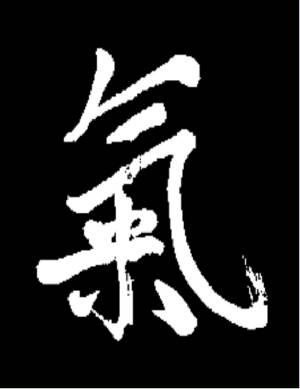
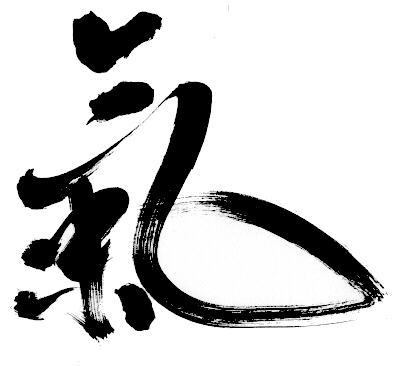
The Chinese character for qi (Chi) is usually translated into English as "vital energy" or "life force," although its literal meaning is "breath."

Chi exists in the human body without form, colour or substance. The ancient Chinese likened it to fire, and early Chinese pictographic characters depicted it as "sun" and "fire." Within Taoist literature Chi was seen as a form of vital heat akin to sunlight, without which life could not exist. Today, the most widely used character for Chi (above) depicts steam rising from cooking rice.

So there you have it again. Breath, right behaviour, and an exchange of vital energy or life-force as the basis for a future economic system.


That was some dream!

Illusion


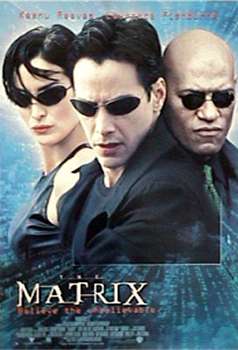
One of my favourite films is the Matrix. Not Matrix Reloaded, or Matrix Revolutions - which are just glorified cowboy movies with special effects and philosophy - but the original Matrix.

What I like is the theme of the movie, that the world is a computer-generated illusion.

At one point the character Morpheus speaks to Keanu Reeves‘ Neo, after he has been released from the controlling power of the machines. He shows him the battered landscape of a post-apocalyptic world, beneath a boiling sky. “Welcome to the desert of the real,” he says.

It’s a great line, spoken with relish by Laurence Fishburne, who plays Morpheus.

When I saw the movie for the first time it struck me that it was an allegory of the state we live in.

How do we know what it real and what is not?

Contemporary neuroscience tells us that what we perceive as real is only a three-dimensional hologram happening in the brain. It is a perception of reality, not reality itself.

This is made more complicated by the fact that this secondary perception - this perception of perception - is filtered through ever more evolved and remote processes: such as language, such as culture, such as art, through the beliefs we share and the conceptual baggage we accumulate to interpret it all.

“Conceptual baggage.” That’s a good phrase. It brings to mind a perpetual tourist on a never-ending journey to a nonexistent package holiday, getting to yet another transit point during yet another change of transportation, dragging along a trolley full of the accumulated baggage of his compulsively acquired souvenir-collection. Which is how I sometimes feel about myself. Always on a journey, never arriving anywhere.

Meanwhile there’s ever increasing volumes of pointlessness to contend with. Like TV for instance.

Most of us in the modern world have been brought up with TV. We spend large amounts of our day sitting in front of the box watching those flickering two-dimensional images of people pretending to be someone else. And that applies to newsreaders and politicians as much as it does to actors.

It is TV that explains our world to us. It is TV that reflects our sense of being. We live our lives as stars of our own on-going reality TV soap-opera, providing our own story-lines and our own themes while striking up endless dramatic poses for the omnipresent camera of the mind. Laughing at our own jokes. Nodding sagely at our own observations.

Big Brother is watching us, even as we‘re watching Big Brother. But who is Big Brother really? We all are.

Even the news is just a branch of the entertainment industry these days, and our politicians spend more time spinning reality to make it look like something else than they do getting on with the job.

Just one more layer to add to the shifting, interweaving web of misperception and misrepresentation that makes up our sense of being.

Strip it all away, and what is there left? Maybe none of it exists. Maybe it’s all an illusion.

This is basically the Buddhist position. The world is Maya - illusion. Attachment brings suffering. The aim of life is to disengage from the cycle of birth and rebirth, to attain enlightenment. Even the soul does not really exist. At the heart of the Buddhist universe lies emptiness, the void.

But, you wonder, why emptiness? Why not fullness?

And while the world may not be exactly as we perceive it, isn’t it just as crazy to say that it doesn’t exist at all?

I went for a walk in the woods this evening, just to clear my head before finishing off this piece.

There was a fat, yellow moon low on the horizon, like a pat of butter on the infinite blue plate of the sky. Birds singing their evening prayers. Trees rustling in the breeze. A few rabbits bobbing through the undergrowth.

An illusion, maybe. But a very nice illusion.

Sunday, January 21, 2007

I Have Seen The Fnords

Robert Anton Wilson
1932-2007
"Let your spirit dance!"


I was having this dream. It was one of those deeply irritating, frustrating dreams in which everything is wrong somehow.

There was a baby in a bag on the floor, crying. I wanted to find the “owner” of the baby: the person who was responsible for it. I picked up the baby and the baby started pissing. He was pissing all over the floor. I located the responsible person and confronted him. He was this fat loser, unshaved and dishevelled-looking, standing limply in a corner. I was trying to hand the baby over, but the fat loser refused to accept responsibility. Then he loomed up very close to my face and was grinning like an idiot.

Meanwhile I was leaning on the banister of the stairs, but I could feel the floor beneath me giving way. Afterwards I was trying to clean up. The place was a horrible mess. There were piles of filth everywhere. Filthy rags soaked in grease. I was washing up, but people were getting in my way, trying to make dinner. They were making this “healthy” meal amidst all the piles of grease and slime. Eventually I confronted one of them.. I was shouting at him. I was very angry. He is a person I know. I used to be friends with him but we have fallen out. There is a long history between us.

He used to live in this town but has since moved away. When he comes here I always hear from a third person that he is here. “Guess who is sitting in the Labour Club with a pint?” she says.

In the dream that’s what I was shouting about. I went up very close to his face and shouted: “you never tell me you are here. I always have to hear it from someone else. Why don’t you let me know you are here?”

After that I woke up. I was seething with an unaccountable anger. It made no sense. I mean: I was angry at a person I was no longer friends with for not telling me he was in town.

Why should I be angry? Why should I even care? It's not like he was a friend of mine. But it was obvious from the dream that I did care. From the dream it was obvious that if he told me he was in town once in a while, maybe we would still be friends.

My first thought was, “That was a fnord. I have seen the fnords.”

What are “the fnords” you ask?

They are nothing. “Fnord” is a nonsense word. It means nothing at all.

Wikipedia defines it as “the typographic representation of disinformation or irrelevant information intending to misdirect, with the implication of a conspiracy”.

The word was first used in a book called the Principia Discordia by Kerry Thornley and Greg Hill, also known as Omar Khayyam Ravenhurst and Malaclypse the Younger. Later it was picked up by the writers Robert Shea and Robert Anton Wilson in the cult Sci-Fi novel, The Illuminatus! Trilogy.

In The Illuminatus! Trilogy the word is used as part of a conspiracy to create unease in the population. From an early age we are taught not to see the fnords. We are conditioned by subtle electronic means not to see the word. And then, when the secret rulers of the world – the so-called “Illuminati” - want us to feel uneasy, or to undermine a particular point of view, they add the word to the text of the newspaper or magazine article. So we see the word but don’t see it. We don’t allow ourselves to see it. It doesn’t exist.

My anger in the dream was a form of this. It was an anger I wouldn’t allow myself to feel: the anger of my sense of betrayal by someone who used to be a friend. Instead of feeling it I pretended indifference. But the dream revealed it. In the dream I was truly angry. The reason I idendified it as a fnord is that it was a hidden anger, and symtomatic of all the anger I feel about everything that pisses me off in the world. All that garbage. All that fractious irritation. All those piles of slime and filth.

This was clarified for me by an I-Ching reading I did later that day.

I got hexagram 57, Sun, The Gentle, Penetrating.

Nine in the second place means:
Penetration under the bed.

Priests and magicians are used in great number.
Good fortune. No blame.

At times one has to deal with hidden enemies, intangible influences that slink into dark corners and from this hiding affect people by suggestion. In instances like this, it is necessary to trace these things back to the most secret recesses, in order to determine the nature of the influences to be dealt with. This is the task of the priests; removing the influences is the task of the magicians. The very anonymity of such plotting requires an especially vigorous and indefatigable effort, but this is well worth while. For when such elusive influences are brought into the light and branded, they lose their power over people.


That is the best description of the fnords I have ever read. "Penetration under the bed".


A friend of mine who lives abroad told me that she was on a tube train during a recent visit to the UK. She said an Asian man with a rucksack got on, and the tension in the carriage visibly mounted. Everyone was looking at him. Everyone was suspicious of him.

“It is this damn war on terror,” she said. "You can't get away from it." She said she felt the tension too, despite the fact that she knew that the man was most likely innocent. She said she felt afraid of him too.


The war on terror is a fnord. "Disinformation... intending to misdirect." The word "terror" is applied in the news with dreary regularity, until we forget what it means, until it is absorbed unconsciously, and becomes part of the backdrop of our daily lives.

This is how the fnords are described in The Illuminatus! Trilogy:

Then I saw the fnords.

The feature story involved another of the endless squabbles between Russia and the U.S. in the UN General Assembly, and after each direct quote from the Russian delegate I read a quite distinct "Fnord!'' The second lead was about a debate in congress on getting the troops out of Costa Rica; every argument presented by Senator Bacon was followed by another "Fnord!'' At the bottom of the page was a Times depth-type study of the growing pollution problem and the increasing use of gas masks among New Yorkers; the most distressing chemical facts were interpolated with more "Fnords.''

Suddenly I saw Hagbard's eyes burning into me and heard his voice: "Your heart will remain calm. Your adrenalin gland will remain calm. Calm, all-over calm. You will not panic. you will look at the fnord and see it. You will not evade it or black it out. you will stay calm and face it.'' And further back, way back: my first-grade teacher writing FNORD on the blackboard, while a wheel with a spiral design turned and turned on his desk, turned and turned, and his voice droned on, IF YOU DON'T SEE THE FNORD IT CAN'T EAT YOU, DON'T SEE THE FNORD, DON'T SEE THE FNORD . . .

I looked back at the paper and still saw the fnords. This was one step beyond Pavlov, I realized. The first conditioned reflex was to experience the panic reaction (the activation syndrome, it's technically called) whenever encountering the word "fnord.'' The second conditioned reflex was to black out what happened, including the word itself, and just to feel a general low-grade emergency without knowing why. And the third step, of course, was to attribute this anxiety to the news stories, which were bad enough in themselves anyway. Of course, the essence of control is fear. The fnords produced a whole population walking around in chronic low-grade emergency, tormented by ulcers, dizzy spells, nightmares, heart palpitations and all the other symptoms of too much adrenalin. All my left-wing arrogance and contempt for my countrymen melted, and I felt a genuine pity. No wonder the poor bastards believe anything they're told, walk through pollution and overcrowding without complaining, watch their son hauled off to endless wars and butchered, never protest, never fight back, never show much happiness or eroticism or curiosity or normal human emotion, live with perpetual tunnel vision, walk past a slum without seeing either the human misery it contains or the potential threat it poses to their security . . .

Then I got a hunch, and turned quickly to the advertisements. it was as I expected: no fnords. That was part of the gimmick, too: only in consumption, endless consumption, could they escape the amorphous threat of the invisible fnords. I kept thinking about it on my way to the office. If I pointed out a fnord to somebody who hadn't been deconditioned, as Hagbard deconditioned me, what would he or she say? They'd probably read the word before or after it. "No this word,'' I'd say. And they would again read an adjacent word. But would their panic level rise as the threat came closer to consciousness? I preferred not to try the experiment; it might have ended with a psychotic fugue in the subject. The conditioning, after all, went back to grade school. No wonder we all hate those teachers so much: we have a dim, masked memory of what they've done to us in converting us into good and faithful servants for the Illuminati.

In the book the fnords are nonsense words inserted into the text of newspapers and magazines which we are taught not to see but which create a sense of unease. More broadly, they are unconscious, hidden or invisible forces, directing us (or misdirecting us) in certain ways.


Examples of fnords might be: God, bigotry, patriotism, wealth, greed or hatred.

I must admit to not liking the book. I personally wouldn’t recommend it. It’s a huge, sprawling, hardly comprehensible work, with a constantly changing narrative - sometimes written in the first person, sometimes in the third - shifting from one point-of-view to the next in the space of a paragraph or halfway through a sentence. Rolling Stone magazine described it as “the longest shaggy dog joke in literary history”.

It was first published in 1975, written by two Playboy editors at the time, Robert Anton Wilson and Robert Shea. The basic premise of the book is that every conspiracy theory is literally true. It soon became a sort of bible for the New Age Traveler movement of the late seventies and early eighties. There were five requirements for a New Age Traveler: unlaced paratrooper boots, a dog on a string, dreadlocks, dirt and a copy of the Illuminatus! trilogy. Only the last was mandatory.

Later Robert Anton Wilson went on to write a number of mischievous, funny, irreverent works of non-fiction, including Cosmic Trigger, Prometheus Rising and Quantum Psychology.

These books are definitely worth reading. They explore the interface between politics, spirituality, science, art and psychology. Is there such an interface? Of course not, which is why it is worth exploring. They are deliberately anarchic, wildly funny, darkly conspiratorial and amongst the best books to have been written in the 20th century. It’s only odd that the name “Robert Anton Wilson” isn’t more widely known.

I predict that one day it will be.

Every rebellious teenager should be told not to read him, thus ensuring that they do.

In a 2003 interview with High Times magazine, he called himself a "Model Agnostic”. This, he says, "consists of never regarding any model or map of the universe with total 100% belief or total 100% denial.... I put things in probabilities, not absolutes... My only originality lies in applying this zetetic attitude outside the hardest of the hard sciences, physics, to softer sciences and then to non-sciences like politics, ideology, jury verdicts and, of course, conspiracy theory." More simply, he claims "not to believe anything," since "belief is the death of intelligence." He described this approach as "Maybe Logic."

Maybe Logic is also the name of a film made about him.


Here are some lines from the film: "Dogs see grass differently," he says. "You need the human brain and the grass hitched together to make the yoga which we call The Greenness of the Grass. Everybody thinks it's very hard to be a mystic. Gotta go through a hell of a lot of effort to realise your union with everything. Actually you are experiencing your union with everything all the time, otherwise you wouldn't be experiencing anything."

He said that the greatest conspiracy in the world was the conspiracy of the stupid.

In an entry in his blog about three years ago he wrote:

I don't believe anything, but I have many suspicions. I strongly suspect that a world "external to," or at least independent of, my senses exists in some sense. I also suspect that this world shows signs of intelligent design, and I suspect that such intelligence acts via feedback from all parts to all parts and without centralized sovereignty, like the Internet; and that it does not function hierarchically, in the style an Oriental despotism, an American corporation or Christian theology. I somewhat suspect that Theism and Atheism both fail to account for such decentralized intelligence, rich in circular-causal feedback. I more-than-half suspect that all "good" writing, or all prose and poetry that one wants to read more than once, proceeds from a kind of "alteration in consciousness," i.e. a kind of controlled schizophrenia. [Don't become alarmed -- I think good acting comes from the same place.] I sometimes suspect that what Blake called Poetic Imagination expresses this exact thought in the language of his age, and that visits by "angels" and "gods" states it an even more archaic argot. These suspicions have grown over 72 years, but as a rather slow and stupid fellow I do not have the chutzpah to proclaim any of them as certitudes. Give me another 72 years and maybe I'll arrive at firmer conclusions.

He never managed another 72 years. In fact he managed barely three.

Robert Anton Wilson died on the 11th January this year, just a few days shy of his seventy fifth year on this planet.

He was a great writer.


In an imaginary phone call to the Marquis de Sade* he asked: "Jesus told me that he and you agree on at least one thing and it explains freedom. What is that one thing?"

"Quite simple," replied the Marquis, "don't be afraid of the Cross. The fear of death is the beginning of slavery."

His last written words were these, on the 6th of January, five days before his death: "Various medical authorities swarm in and out of here predicting I have between two days and two months to live. I think they are guessing. I remain cheerful and unimpressed. I look forward without dogmatic optimism but without dread. I love you all and I deeply implore you to keep the lasagna flying. Please pardon my levity, I don't see how to take death seriously. It seems absurd."

In The Illuminatus! he reflected on death in the following words:

If there were no death, there would be no sex. If there were no sex, there would be no death. And without sex, there would be no evolution towards intelligence, no human race. Therefore death is necessary. Death is the price of orgasm.”

As for whether we think the price is worth paying or not, I suspect that Robert Anton Wilson at least would have replied in the affirmative.

Is it worth it? Is death a price worth paying for the joy of a few good mutual orgasms?

Of course it is.

Maybe death is the final fnord.


*******

Robert Anton Wilson essays:

http://www.10zenmonkeys.com/

*http://www.deepleafproductions.com/wilsonlibrary/texts/raw-marquis.html

Sunday, January 14, 2007

Saddam Execution


Tony Blair has condemned the manner in which Saddam Hussein was executed saying “it was completely wrong”.

In other words there is something worse than having a rope tied around your neck and then being dropped through a trap door so that your neck breaks and your tongue lolls out. It is all of this and then being insulted at the same time. As if death wasn’t enough, death with insults: as if death without insults would have been so much more humane.

Did you notice that they put a silk scarf round his neck too, so that he wouldn’t get rope-burn? A broken neck is fine but rope-burn is unacceptable.

Some of you will say he deserved it. Maybe you are right. I have my own views on capital punishment. I think it would have been far better to have made him live with his crimes than to have let him off so lightly.

On the other hand I can’t argue with the Iraqi people’s right to do as they liked with the man, having suffered under his foul and capricious regime for so many years.

But it seems to me there was an unseemly haste about the process. He was found guilty of the murder of 148 Shi’ites in southern Iraq, and yet there were hundreds of thousands - perhaps millions - of deaths attributable to him.

Surely justice demands that he should have been held accountable for all of his crimes, not just those selected by the United States.

The Iranians wanted him tried in an international court. Not only did he invade their country, killing up to a million people in an orgy of mass violence, but he also used mustard gas, nerve gas and other illegal weapons. Surely the Iranians too deserved their day in court?

So why wasn’t he held accountable by an international criminal court for his crimes against humanity?

I think you already know the answer to this one.

Because we in the west were directly implicated in those crimes.

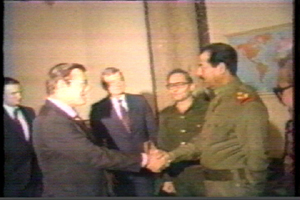
We’ve all seen the pictures of Saddam Hussein shaking hands with George Galloway. There are also pictures of him shaking hands with Donald Rumsfeld, who was in Baghdad at the time the UN released a report showing that the Iraqi army had used mustard gas in Iran. You have to ask why those pictures haven’t been blazoned across our front pages too?

There’s that old joke. How come we were so certain that he had weapons of mass destruction?

Because we kept the receipts.

But there’s something else which disturbs me about this whole episode.

It was virtually a public hanging.

The whole world saw the lead-up to the hanging. The whole world saw his body afterwards. We watched it all on TV.

If you are really sick you can catch the whole ghoulish event on the internet.

So this is what this so-called war on terrorism has brought us to. It has revived public hanging for our edification and entertainment.

It has turned us into barbarians.

Thursday, January 11, 2007

The Largest Country In The World

It was approaching Christmas, twelve years ago.

The usual time: sending cards, buying presents, planning, getting all worked up about nothing. Who’s who on your Christmas list? Should you send a card to so-and-so? Will she remember you? What if you send a card to her and she doesn’t send you one?... Well you know the sort of thing. It all seemed so important at the time.

And then something happened that changed K’s life.

It was like being marooned in a foreign country, unable to find her way home. One day she was well. In good spirits or bad spirits, it made no difference. She was well. And then - suddenly, unexpectedly - she wasn’t well any more.

It started with a cough, growing increasingly persistent, a general discomfort and fatigue. She was sent home from work one day and never went back. It ending up with her in a wheelchair, stranded, alone.

There’s some dispute within the medical community as to whether M.E. is real or not. Some would say that it is mainly psychological. It’s an academic argument of course, played out by professionals with their own sets of agendas. It makes little difference. If there are psychological elements to the illness – who can say? - it still keeps the sufferer bound. House bound. Wheelchair bound. Unable to move around.

In a foreign country, all the rules are different. Things you thought you understood no longer make sense. Steps are barriers. Stairs are mountains. Doors block your entrance. People loom over you or hover at a distance. People look at you strangely. People are embarrassed, or too kind, or condescending, or too careful, or too wary. They avoid eye contact, they avoid talking. Sometimes they see you and, rather than meet with you, turn around and walk the other way.

In the end, of course, you grow accustomed to your new land. Twelve years: it’s a long time. You learn the language. You learn to fight to survive. You meet other foreigners like yourself, people with disabilities. You draw comfort from them. Maybe you even get complaisant. You bitch a little between yourselves, scorning the natives. And then, suddenly, you begin to see that there are more foreigners stranded here than you could ever have imagined.

That’s what happened the other day. K was shopping, wasting money again, on people who already had as much as they needed.

There was a woman on the street, begging.

She invited the woman for a cup of tea. The woman accepted. She said, ‘I’m going to get a flat on Monday.’

‘That’s good. How have you managed that?’

‘I just have,’ the woman said, suddenly defensive. ‘It’s best not to say.’

‘I understand,’ K said. But she didn’t understand because she hadn’t lost her home.

But the woman was nervous. She didn’t want to stay for the tea and instead asked for a takeaway. She fumbled with the teabag in the plastic cup, not knowing where to put it, apologising profusely. It was as if she was apologising for her life. There was a look in her eye, like shock, like abandonment, as if the world had deserted her and all her kind. She stumbled back on to the street where she felt more at home.

That was when it all became clear. Being homeless is being disabled too. And then K understood the nature of the country she’d been so mysteriously taken from all those years ago, and the nature of the country she now found herself in.

Her new country is the country of dispossessed and disabled humanity, the largest country in the world, shared by millions. The country she came from - and which she no longer misses - is the country of easy certainty and quiet complaisance, where nothing matters as long as it’s mine.

“And if you ask me now, who is the disabled person, I will tell you,” says K. “The truly disabled are the one’s who’ve forgotten that they are also human beings.”


*******

Wednesday, January 03, 2007

Death and Taxes


It was Benjamin Franklin who said that nothing in life was certain but death and taxes. Personally I wouldn’t argue with that, except for the fact that income tax was only administered first during the Napoleonic Wars, whereas death - by my reckoning - has been around for a good while longer. And while death might be difficult to reconcile with your life at times, at least it makes some sort of sense.

Mind you, there may be other ways in which the two things are similar. Both of them ask you to make an account of your life. In the case of death, it forces you to think of all the things you have done, whether for good or for evil, in this world. In the case of taxes, it asks you to account for all those grubby invoices and crumpled receipts that have been gathering dust in a cardboard shoebox for the past year, none of which make any sense whatsoever.

Not that I am contemplating death at this particular moment. I am, however, considering my tax returns.

God, I hate this time of the year. Christmas is over, the New Year has come and gone. You’ve spent too much money on pointless frivolities and unwanted presents, have overindulged in every kind liquid substance you can funnel into your mouth and have bloated out like a beached whale with all the excess of food. You’ve made your resolutions, and probably already failed to keep most of them. There’s several months of winter ahead, of sweeping winds and scudding clouds and relentless rain and darkness, and nothing on the TV but makeover programmes and repeats. And then the bills start flopping through your letter box and you have your tax returns to complete.

I mean, what mean-minded petty bureaucrat decided that this was the time to make you have to deal with all of this? As if the bills weren’t enough, now you have to answer for every half-remembered expenditure, every dodgy financial decision and every untraceable cheque from whatever source that has inadvertently found its way into your bank account for the last year or so.

Money is only money after all. It’s either there, or it’s not. And when it’s not there you have little choice but to find ways of making it again.

It’s a bit like oxygen, really. It pumps around in the body of your life keeping you going. You breath in, you breath out. You have money, you spend it. Imagine if some clever bureaucrat had devised ways of making you account for all the oxygen in your blood: if you had to keep written records of all the times you had breathed and for what purpose, as if every expenditure of energy on this or that activity had to be accounted for and cross-referenced and noted down in your yearly oxygen-returns, twenty to twenty five percent of which had then to be paid to the government. I mean: you’d stop bothering to breath, wouldn’t you?

Well I wouldn’t mind so much if I thought the government was using my money wisely: for improvements in our public services, say, for education, or for a decent transport system. Instead of which we have foreign military adventures, private finance initiatives, back-handers to Third-World Dictators and mounting debts for our young people in the name of a third-class education.

What’s a private finance initiative, you ask? It’s your tax money given to private companies so they can run-down our public services, while making a profit at the same time.

What‘s the point, that‘s what I‘d like to know? At least death serves a purpose. It’s there to keep the queues down at the Post Office on pension day.

Monday, January 01, 2007

New Year Message


There is a mistaken belief, going back to the 60s and 70s, that us human beings can destroy the planet on which we live. Back then we thought it would be nuclear war. These days we think it will be global warming.

This is pure vanity, of course - not to say, hubris - to imagine we are powerful enough to destroy life on this planet. We are nothing more than ants crawling on its surface. We cannot destroy the planet, or the stupendous, rich, complex sources of life it sustains: what we can do is make it uninhabitable for us human beings.

I’ve heard that scorpions and cockroaches can survive a nuclear attack. I suspect they would like the conditions created by global warming too. So maybe that’s the question: it’s not whether the earth will survive, it’s whether we want a world full of scorpions and cockroaches, or one fit for humans to live in.

According to some estimates, at the current rate of species depreciation, the earth will reach tipping point by 2012. That is, unless we change our ways drastically within the next FIVE years the earth with begin to become unsustainable for human life. That doesn’t mean human life will end, just that we will have gone passed the point of no return, in which life can only get progressively worse.

Other estimates are less pessimistic: they allow us till 2050 to get our act together.

Either way, within the lifetimes of our children, we have some very profound choices to make.

Meanwhile we are still destroying habitat, razing down the rain forests to make way for cash-crops, and continuing to pollute the planet at an unsustainable rate.

In other news: in 2006 Tony Blair stated that immigrants to this country should learn our values or stay away.

This is another one of Tony Blair’s rib-tickling jokes, of course.

So what values, Mr Blair, should immigrants have to learn in order to be allowed entry into this country?

Obviously the values of invading a poor, defenceless, third-world nation in order to steal its oil, of lying in order to provide a pretext, and then, when that fails, of making some pretence about bringing democracy and getting rid of dictators while, at the same time, covering up one’s own responsibility for keeping that dictator in power.

Saddam was tried and executed in 2006, but his accomplices in the White House got away with it.

Meanwhile we are still keeping dictators in power.

One of the most ludicrous things last year was when Tony Blair described President Musharraf of Pakistan as a “moderate”.

Musharraf: a dictator who overthrew a democratically elected government in a military coup, who routinely uses torture and “disappearances” and who supported the Taliban through all of their worst atrocities.

These days we have to support dictators who support terrorism in order to maintain democracy and defeat terrorism, it seems.

This is obviously another one of Tony Blair’s hilarious jokes.

Boom boom! He’s so funny.

A happy New Year to you all!