Sunday, June 04, 2006

Memories of a Free Festival


Bill "Ubi" Dwyer at Windsor Free Festival.


"So what is a free festival?

"It's a party. It's a camping trip. It's a social gathering. It's a spiritual occasion. It's a celebration. It's a political protest. It's a rally...."


“Reclaim The Archetypes!”


Two old festival goers meet in a pub, and begin reminiscing about a particular festival. Except that, within ten minutes, they discover that they have no memories in common: not one memory coincides. They know that they were at the same festival on the same date, but beyond that nothing. They remember entirely different things.

"Were we even at the same festival?" one of them asks, archly.

The cliche about the sixties is that whoever remembers them wasn't there. The line about the free festivals might be: whoever doesn't remember something utterly unique about them wasn't there.

The difference between a free festival and a pay festival may appear obvious on the surface. A free festival is free. But, while they have a common origin - the earliest free festivals, such as Woodstock in the United States, and Phun City in the UK, having started as pay festivals that went wrong - the main difference lies in the organisation, there being no overarching structure of control at a free festival, and no profits for the corporations. Thus the differences are - actually - immeasurable.

So what is a free festival? It's a lot of things.

It's a party. It's a camping trip. It's a social gathering. It's a spiritual occasion. It's a celebration. It's a political protest. It's a rally. It's a bike rally, a truck rally and a political rally all at the same time. It's an alternative economy, a market, where you can buy and sell all sorts of things. It's a craft fair. It's a place where you can meet new lovers or old friends. It's a showcase for bands and for alternative technologies. It's an exercise in collective decision making and collective dreaming. It is the model for a certain type of pop anarchism. It's an extended family. It's a cheap holiday. It's a safe place to bring the kids. It's a romantic interlude. It binds you to the past and anticipates the future. It's all of these things and more.

Inspired firstly by the film of Woodstock, which came out in 1968, and then by the sequence of free concerts held in Hyde Park during the late sixties and early 70s, the early free festivals were unique affairs.

The slogan for the Windsor free festival, one of the earliest, held at Windsor Great Park during the August bank holidays between 1972 and 1974 - reclaiming what had once been common land - was "Pay No Rent". That tells you a lot about what was going on at the time.

In fact, the man who first conceived of the festival, Bill Ubi Dwyer, a civil servant who utilised government copying facilities to publicise the event, saw it in a vision. He saw a mass of people, like a gathering of the tribes, on Crown land. And when attempts were being made to block his progress, by denying him permission, he said: "I personally have God's permission for the festival."

This is the stuff of legend, of course. It may or may not have happened. But if it didn't happen, it ought to have.

And that's what people seem to remember about the festivals. Something archetypal: something reflecting a mythological dimension, like a stirring from the depths..

As Willow, 51, from Glastonbury said, referring to the Stonehenge festival: "To me it was like a strobe light. You saw the sacred and the profane interacting every minute. On mid-summer's eve, it would buzz, it was like a dome came down over it, and I saw whirling orange spirals in the sky, and everything became completely archetypal." And she likened the atmosphere to one of those Goblin Fairs of Fairy-stories: a place where anything can happen.

Des, 53, also from Glastonbury, agreed.

He was remembering one particular festival.

"Might have been Trentishoe. Right on the North Devon coast. I remember we got there about four in the morning. You couldn't drive to this place. You had to walk up a track. And I remember as I got to the bottom of the valley with the crest of the hill in front of me, these three people and a goat appeared through the mist, and there was this woman, a very tall Apollonian figure, with long blond hair wearing a loin cloth, and some bloke carrying a big bundle tied up on his back and leading this goat on a lead. They were leaving this festival and walking back up into the world. And it was a bit like something out of Crock of Gold, you know, the James Stevens book. Because it was so mythological. They just seemed so majestic."

This was deeply impressive to the young man, who set about remaking himself as his own archetype.

It was this quality that separated the festivals from ordinary political events. Because, although there was a political intent, to do with the liberation of private property, born from a specifically anarchist perspective, the events themselves brought up much that was deeply embedded in the human heart*.

Not that everything was perfect.

Willow also remembered the biker riot one year at the Stones, when the Hell's Angels had moved in and attempted to take over. The bikers and the travellers had ended up eyeballing each other across the main drag, until the bikers had backed down. You had to be willing to protect yourself. But in later years the bikers became as much a fixture of the festival as everyone else. Willow had only escaped the fearfulness of the occasion because she was, as she says herself, in fairyland at the time.

Steve, 51, from Cardiff, was also aware of some of the negative aspects of the culture.

He was hitch hiking home from one festival, when he collapsed. "I got to Bristol to an interchange there, and there was a whole queue of people, more festival goers, maybe twenty, thirty odd people lined along the road," he says. "I'd been walking for hours, it was hot, I was tired, and I must have just flaked out: you know, exhaustion, heat, everything." He came to several hours later. But what struck him was that the other festival goers hadn't even checked if he was all right. "I'm thinking, where are all the people, where are all these hippie cool people gone? They all left me here. I could have been dead."

So there was also a kind of narcissism there. Some people were just too cool to think about anyone but themselves.

Later came the introduction of heroin and cocaine, and the consequent involvement of the criminal fraternity, before Ecstasy, Acid House Parties and Rave entered the picture in the late eighties, reviving the scene again.

The last great free festival was held at Castlemorton Common, near Tewkesbury in the Malvern Hills in May 1992. It lasted about four days and up to 50,000 people attended. There was a big court case afterwards in which fourteen people were charged with "Conspiracy to Cause a Public Nuisance". Between them, the policing operation and the court case cost the British Taxpayer approaching £5 million. All fourteen people were found Not Guilty. The infamous Criminal Justice Bill of 1994 was enacted precisely to stop this kind of event from ever happening again..

Since then there have been a few other attempts to create a major free festival, most notably The Mother Festival in 1995, effectively splintered by the police into several smaller scale events. And every summer across the country small groups of people still gather to sit beneath the stars, in woods and fields, round an open fire, to revel in each other's company, sometimes with music, sometimes not.

As to whether there will ever be another large scale festival in the United Kingdom: that depends.

It's down to you.


The Trials of Arthur by CJ Stone & King Arthur Pendragon: Element Books June 2nd 2003, ISBN 0-00--712114-8.


Useful links: Squall Online.

*- "Anarcho United Mystics (AUM) started working back in 1977 because the 'revolutionaries' kept overlooking the need to change themselves as well well as the world, and the 'occult/religious' kept overlooking the need to change the world as well as themselves. These oversights reulted in 2000 years of failed revolutions and millions of people wasting their lives with religious/spiritual illusions and dogmas. After all, what is the motive of revolution? Ultimately, it is love. Love objects to the injustice of the present system, the starving millions, the wars and corruption of the ruling powers. But this love, the essence of revolution, is the easiest part to overlook and the forgetting of it has resulted in hundreds of failed revolutions and useless religions". Tim Corber, AUM Newsletter, 1980


The Top Five Free Festivals.

Phun City, July 1970.

Originally conceived as a paying event, organised by Mick Farren of the Social Deviants: when the organisation collapsed it turned into the first ever UK free festival. Several bands who had been invited were asked to pay for free. The only band who refused were, ironically, Free. The promo slogan was "Get Your End Away At Phun City!"

Glastonbury Fair, Summer Solstice 1971.

A visionary affair. Organised and paid for by Andrew Kerr, ex Personal Assistant to Randolph Churchill, on Michael Eavis's dairy farm in Pilton, Somerset, it became the model for all subsequent Glastonbury Festivals. As Kerr said at the time: "If the festival has a specific intention it is to create an increase in awareness in the power of the Universe, a heightening of consciousness and a recognition of our place in the function of this our tired and molested planet." Whew!

Windsor Free, August Bank Holiday 1972-74.

The last festival was violently attacked by the police, with a number of arrests and several injuries. Such was the negative reaction to this in the press that the police left the festivals alone for over ten years after that.

Watchfield, August Bank Holiday 1975.

Not a particularly good festival, by all accounts, it has the unique historical distinction of being the only free festival in which the British Government collaborated, by providing the site: a disused airfield in Berkshire. A model for the future, perhaps?

Stonehenge, Summer Solstice, 1974 - 1985.

The Mother of all Free Festivals. The longest lasting and best remembered. Started by Phil Russell, aka Wally Hope, after a vision - an experience he shared not only with Bill Dwyer, but with Andrew Kerr too (is this a pattern?) - it was finally stopped in 1985 after the infamous Battle of the Beanfield: effectively a police riot. Gatherings at the Stones on Summer Solstice night resumed in 2000 and continue to this day. No festival, although there have been various attempts to set one up in the vicinity. One day maybe?

Remembering Bill Ubi Dwyer

I helped Ubi Dwyer to publicise a free festival in Phoenix Park, Dublin, 1978.

By Garreth Byrne

I first came across Bill 'Ubi' Dwyer in April 1978 at the top of fashionable Grafton Street near St. Stephen's Green in Dublin handing out leaflets about a free music festival being organised for the bank holiday weekend of 5-7 August. The venue was The Hollow in Phoenix Park, in the western suburbs of Dublin. The word peace was prominent on the leaflet and other messages like: Everybody welcome, catholic and protestant. "We are all one" ended the leaflet at the bottom. It contained a request for help, donations and offers to play music, with a contact address. Pictures from the Windsor Free Festivals decorated the text.

I had read bits and pieces about the Windsor festivals in the British magazine, Peace News, which I'd subscribed to when teaching English in Zambia during the mid-1970s. It appeared to be part of the flower power anti-authority wave that had rolled across the Atlantic from San Francisco since the late 1960s, on the crest of the greater, world-wide anti-Vietnam War wave.

In 1978 I was involved in the production of an Irish nonviolence magazine called DAWN. I was curious to hear a first hand account of the bohemian protest scene that I had missed out on by spending some critical early years of my teaching career in spartan parts of Africa. I wrote to Ubi Dwyer and he invited me to interview him at his home in Glenageary, a leafy suburb not far from the upper class seaside suburb of Dun Laoghaire.

I approached a tidy, modest bungalow off Glenageary Road. From the front garden came a waft of primroses, wallflowers and tulips. A note on the door directed visitors around to the back garden where stood a spacious two-roomed caravan. Ubi stood up from a composted seedbed with a trowel in hand and greeted me. He was then in his mid-forties, tall, wearing a casual yellow and blue suit, had thick silver hair with a matching moustache. He spoke in a deep, confident articulate voice. The accent was Irish, with international traces.

At his own expense he had printed 150,000 leaflets and posters to publicise the Phoenix Park Festival. He and a tiny number of helpers had been distributing them around the city. He had already spent £850 of his own funds on stationary, stamps, phone calls and leaflets. Small donations had been received. About 70 groups and individuals had volunteered their musical talents. These included WATFORD GAP (England), RAVING GALE (Limerick), U2 (not yet a global force, then resident in Malahide, a bourgeois seaside village north of Dublin), ROCKY DEVALERA & the GRAVEDIGGERS (Dublin) and a French folk singer DOMINIQUE.

What had got him into this free festival lark? He told me that ten years previously he'd worked on an Australian newspaper and then considered himself to be a sort of nonviolent anarchist. In Australia he befriended some expatriate American flower power people and learned that there was a "worldwide movement for love and change." He pondered these conversations, gave up his job, travelled, meditated and studied world religions. His study of Hinduism in particular convinced him that free festivals had great potential as a medium for change.

I noted sceptically that the Windsor festivals of the mid-70s had attracted a lot of drug trippers and hedonists who hadn't a notion about changing the world. Ubi agreed but insisted that many other people had been positively affected, so he would continue his efforts. (He had been arrested and jailed in England during Windsor 1975 and returned to Ireland after being released. He worked as an assistant in the physiotherapy department of a Dublin hospital, where he was popular and had a knack for cheering up the patients.) He insisted that free festivals were for everyone and added in a tone of utopian liberalism reminiscent of Voltaire: "Even if the National Front turned up at Windsor - and I disagree with them vehemently - I personally would go and greet them. I wouldn't turn anybody away and I don't agree with the aggressive street confrontations of some NF opponents." In hindsight it is surreal to imagine a weekend musical lovefest involving the NF, Hell's Angels and 57 varieties of militant trotskyists, maoists, feminists and anarcho-syndicalists, although I'm sure the popular Irish singer, Christy Moore, could sing a funny song on the theme if anybody cared to pen the lyrics.

The weather became warmer that year as May dovetailed into June. I decided for the sake of exercise and curiosity to help distribute Ubi's festival leaflets. We went to various locations on bikes, occasionally around teatime midweek but generally on Saturdays. Ubi rode out to Rathgar where my office was based and we headed for any suburb he had targeted. Leaflets were distributed at shopping centres and door-to-door. One Saturday morning there was a big Charismatic religious rally at the Royal Dublin Society hall in Ballsbridge, so we stood at the entrance handing out leaflets there. Another day we leafleted in Castleknock which straddles the north-west perimeter of Phoenix Park. We took the opportunity to look at The Hollow, a natural amphitheatre with sloping grass banks shaded by fine oak, sycamore, chestnut and elm trees. A small roofed bandstand stands in the centre.

That evening we quenched our thirst at a pub adorned with portraits of Irish presidents - Douglas Hyde, Eamon de Valera, Erskine Childers, Cearbhall O'Dalaigh and the then incumbent Paddy Hillery. In Phoenix Park is the stately residence of the largely ceremonial Irish President. The election of women like Mary Robinson (1990) and Mary McAleese (1997) was at the time something in the unimaginable future. I suppose I went leafleting half a dozen times or more when not otherwise busy with my unpaid work for DAWN magazine and the penal reform group, the Prisoners Rights Organisation, of which I was secretary. The weather stayed dry and I enjoyed getting to know different parts of Dublin.

A week before the scheduled event volunteers conferred at a parish hall near Ubi's home. I arrived to find about twenty young people and one older man, Fergus Rowan, a personal friend of Ubi who was then in dispute with the Bank of Ireland over its failure to rescue his horticulture company Rowans Seeds when it had run into crippling cash flow difficulties. The time for the meeting passed. We patiently waited for Ubi to turn up. A half hour elapsed and I walked to his caravan. "Let them wait a bit longer. I've been doing most of the work up to now. Do they expect me to wipe their arses?" were his tetchy remarks when I asked him to come to the hall. This was the first hint I had of Ubi's double personality. I walked back to the meeting place and told them he was coming. "He's one big Ego," noted a young rock fan ruefully. After another quarter hour he arrived. It wasn't a comfortable meeting.

Saturday 5th August the first morning was bright when organisers began to arrive at The Hollow. The first band played to a trickle of spectators. By midday I spotted half a dozen individuals in wheel chairs at one corner, supervised helpfully by Fergus Rowan and a friend, who had arranged special transport. Gradually the attendance swelled to a few hundred individuals and parents with children. More bands arrived and got their gear ready. By lunchtime the sky had clouded over and there was a heavy downpour. Ubi donned a yellow showerproof cape and put a cheerful face on things by dancing and twirling to the music around the bandstand. I noticed a sharp row he had with members of one band who got nervous about the possibility of electric shock and wanted to switch off the AC/DC system. He effed and blinded loudly at them and insisted that the show go on. The shower died down, the sun reappeared, and Ubi disappeared. More people turned up to listen and the music went on smoothly until about 7 p.m.

Around 4 p.m. Ubi reappeared at the bandstand and looked the worse for drink. His reeking breath and raving demeanour suggested several double shots of Irish whiskey in addition to the customary pints of Guinness. A uniformed member of the Gardai (police) and a plainclothes detective tried to reason with him. He was escorted from The Hollow, somehow got to the ferry harbour at Dun Laoghaire and took the boat and overnight train to London. British newspapers reported a week later that Thames Valley police arrested him as he arrived at Windsor Park intending to launch a banned free music festival there. He was sentenced to jail and didn't return to Dublin until the autumn of 1979. I sent a note of sympathy to his mother in Glenageary, with a breakdown of expenses for duplicating programmes handed out at the festival in Phoenix Park. He sent me a polite acknowledgement after his release from prison.

The Phoenix Park festival went smoothly on the Sunday and Monday, with good sunshine and attendances of around three thousand on each day.

The world wasn't changed by this or any music festival, but U2 within a few years became a major rock band and two decades later Bono capped his career by lobbying the Pope and various world leaders on the issue of third world debt. Another Dublin rock star (who didn't perform in Phoenix Park) was Bob Geldof and he gave the moneyraking rock industry a temporary conscience with his celebrated 1985 Live Aid concert for Ethiopia. Fundraising concerts didn't change the world either, but fans rocked their asses off and felt good for having supported a charitable cause. Meanwhile the prime movers and shakers of the rock industry drive people's fantasies and keep smiling all the way to the bank.

Two weeks after Phoenix Park the first Carnsore Anti-nuclear Rally attracted an attendance of 10,000 in the south-east of Ireland. There were speeches, workshops and free music by people like ballad singer Christy Moore. This captured the imagination of the Irish media in a way that Ubi Dwyer's event couldn't hope to do. The anti-nuclear movement mobilised public opinion against moves by the Irish Government to build a nuclear reactor.

Ubi Dwyer promoted a spent flower power peace-and-love approach to social protest. Radical people in the Ireland of 1978 had other concerns and took a grim attitude to social change. Sinn Fein and its sympathisers were deeply concerned about the smouldering H Block crisis in Northern Ireland. Peace campaigners and social workers desperately worked against violence. In the Republic the assorted women's groups were beavering away at sexual equality projects. Poverty and unemployment were increasing as the recession deepened. Individuals like myself were quietly involved in peace and human rights and prison reform campaigning. An incipient environmental movement was gathering momentum. Adi Roche and other campaigners would launch the humanitarian Children of Chernobyl relief organisation twelve years later. Free rock concerts featuring booze and cannabis were thus seen as flippant distractions. Puritanical activists would have regarded Ubi Dwyer as an irrelevant, madcap exhibitionist in the Ireland of 1978.

In the early 1980s Ubi Dwyer was to be seen some weekends standing near Grafton Street dressed in an imposing clerical soutane and matching hat handing out assorted leaflets and engaging curious passers-by in consciousness raising conversation. To some he seemed to be a figure of fun, to others he may have looked like a street evangelist. He bought the clerical gear at Wippels Ecclesiastical Outfitters, a noted London clothing shop frequented by priests and bishops of the mainstream churches.

Around 1984 he circulated a funny memoir of bicycle travels around Ireland undertaken during his holidays over a period of years. It was entitled Senator Sunflower, after the name he gave his peripatetic bike.

What was he trying to achieve? Maybe he was evangelising against what he called the Forces of Awe and Boredom. His aims were sincere and he was highly liked by friends and hospital patients. His eccentric habits didn't attract a following in Ireland. The Forces of Awe and Boredom still haunt the world.

My association with Ubi was only for a couple of summer months in 1978. He and I were of different temperaments, with different cultural and social interests. I enjoyed his company for that short time and moved on. I subsequently promoted third world cultural awareness in Ireland; have dabbled in freelance journalism; have taught English in Africa; done a spell of rural development administration with an Irish aid agency in Tanzania; and have spent periods teaching in China and the Middle East. I'm a bookish, mild-mannered person and have followed my lights in my way. My musical tastes are mostly classical and folk

Ubi Dwyer was a rumbustious, garrulous, hyperimaginative and irrepressible individualist who did things in his own zany way. He was what we call "a bit of a character". He made an impact in the cosmopolitan, atomised mass society atmosphere of south-east England for a few years, but made no headway in the deferential, small scale and more family centered Irish society almost 30 years ago.

A website like this can serve a useful purpose if more of those who were bemused by Ubi Dwyer's zany lifestyle and persuasive personality would record their impressions, and tell us about how their subsequent lives proceeded from then until now.

www.ukfreefestivals.org.

Saturday, June 03, 2006

The Turn-Around


Two hours one way, the briefest breath of foreign air, and then back on the boat for the return journey. They call it 'the Turn-Around'


Tobacco Smuggling in the UK

It was 5.30 on a cool but bright Monday morning. The sun was just nuzzling over the horizon sending sprays of orange light into the milky air. I met Louie at a pre-arranged spot outside the pub. He was carrying a black briefcase, dressed for the part in a flared pin-striped suit, with a stripy shirt underneath, his half-inch thick glasses catching the light and obscuring his eyes. He looked like some psychotic dentist out on emergency call. He said he wanted to blend in, to look inconspicuous. “No one will notice me dressed like this,” he said. “Ha.” And he gave me this conspiratorial look.

We were going tobacco smuggling.

We'd made the arrangements the night before. I'd met him down the pub where he told me the deal. I was to bring £50 with me to buy however many packets of Golden Virginia, which I'd hand on to him, and then, two days later, he'd give me my fifty quid back, plus £16 extra. He made it sound like it was a big deal.

"Hang on, Louie," I said, "sixteen quid. It's not a lot for a day's work is it?"

"No, think about it," he said, tapping his temple wisely, and giving me this arch, knowing, business-like look: "a free trip on a boat, a day out, a couple of pints, and then you come back with 16 quid in your pocket. You can't argue with that can you?"

Well I could argue with that. It was the least convincing argument for an illegal deal I'd ever heard. Sixteen pounds to put my liberty on the line. Fortunately I knew that it would also be an immeasurably entertaining day, and worth all the discomfort just for that.

"Game on?" I said.

"Game on," said Louie, blinking from behind his milk-bottle bottom glasses.

So here we were, speeding down the motorway, heading for the ferry port at 5.45 in the morning, Louie rolling endless cigarettes, and explaining that, actually, he didn't need my fifty quid after all. He'd managed to get Big Ted to lend him the money. Which was a relief, really. I didn't want to get involved in any smuggling operations. I particularly didn't want to get involved in any smuggling operations with Louie, who is the least likely tobacco smuggler on the planet. Which is probably no bad thing. No one can take Louie seriously, not even the Customs Officials, who would be looking for some hard-nosed types, out to make a few hundred, rather than a demented dentist, satisfied with sixteen quid and a day out on a boat.

You've probably guessed by now that Louie isn't a proper tobacco smuggler. I mean, he's been on a few trips, and been caught once or twice, but he's hardly likely to make his fortune in the trade. His regular partner is Big Ted, who is just as unlikely in his own way, but at least has the advantage that he's been in the game for a few years. Originally I'd set out to do the trip with the two of them. This was several weeks before. I'd got as far as the ferry port before it occurred to me that I might actually need to bring my passport with me. So it was two unconvincing smugglers, and one unconvincing journalist, all just as unlikely to succeed in our own chosen trades.

Anyway, Louie and I had arrived at the port by now, and I'd parked the car. It was 6.10 am. Louie had gone in to get the tickets, which are called Flyers. There were a few dead-eyed young men about, gathered in knots in the car-park, or sitting in cars with the windows open, smoking cigarettes with a faint air of desperation, as if they were waiting for more than just the ferry to arrive. "Want any Baccy mate? Marlboro? Superkings?" They say the same thing to everyone.

The trip takes two hours. You arrive on the Continent, pass through Customs, walk across the road and straight into one of the many tobacco-shops lined up by the dock-side waiting to take your English money. The shops are full of English 'Runners': that is, the people who transport the tobacco, day in and day out, across the channel. They make this trip two or three times a day. It's like a job to them. They buy maybe two or three hundred packets of tobacco at a time, talking in English to the English-speaking assistant, who answers through a microphone from behind his bullet-proof glass. The exchange is mono-syllabic and brief. The money is slipped across, counted, and then the tobacco slid beneath the counter through a rubber flap, with a shove of the foot, in boxes of a hundred.

The shop Louie and I went into was clearly set up precisely for this smuggling trade, and nothing else. There's a skip in there. The Runners grab their tobacco and then set about stripping off the packaging and loading the separate pouches into the hold-alls they're carrying. All the packaging is then dumped into the skip, which is already overflowing from the debris of numerous journeys.

You wonder how the British government puts up with this: a supposedly friendly nation allowing dockside shops specifically set up to aid British smugglers. You wonder why there hasn’t been some sort of a protest. It makes no difference to the tobacco companies, of course. After all, they still make their profit whichever country the stuff is sold in, whatever the language is on the packet. Only the tax is missing.

After that the Runners might buy a few cans of strong lager, to help with the journey back. And that's it. Two hours one way, the briefest breath of foreign air, and then back on the boat for the return journey. They call it 'the Turn-Around'. No wonder the tickets are called Flyers. It's a flying visit. Then it's a two hour journey back, when they drop the tobacco off with the men in the car-park, pick up their money, turn around and start again. They go on like this until the van is full, and then drive off to whatever part of the country they come from. And that, in brief, is the illegal tobacco trade. Every port is Britain is bustling with it.

On the way back Louie was telling me about the times he's been caught.

The first time this bloke had came up to him. Hair down to his shoulders, looking like it hadn't been combed in a month. Leather jacket. He said, "I want to look in your bag." "Hang on mate, I want to see an official," said Louie. "I am an official," he said, and pointed to his official-looking badge. So Louie showed him what was in the bag. Three hundred and fifty mixed packets of tobacco. Golden Virginia, Drum, Old Holborn. And the scruffy customs official laid it all across the counter. "It's a fair cop," said Louie.

"And then he started putting it all back in the bag," Louie told me. "I said, 'excuse me, but that bag is my personal property. You can have the tobacco, but I want the bag back.'"

"That's all right, mate," the customs official had said. "I'm not going to confiscate it this time. But next time: be warned." And he passed the bag back over the counter.

So Louie had got away with it. But he wasn't so lucky the next time: he lost the lot. There's Louie, all 4'11 of him, struggling through customs with this giant-sized hold-all. You couldn't see Louie, only his legs, tottering away beneath the weight. "Like a hold-all on legs," as Louie described it. And he was pulled.

"Excuse me, can I look in your bag?" Same thing. 350 packets of mixed tobacco. "I don't believe this is for your personal consumption," said the official.

"Yes it is," said Louie. "I don't like any one brand, so I mix it all together. And then I freeze it."

"Freeze it!" said the customs official in laughing disbelief. "You can't freeze tobacco."

"You can freeze anything," said Louie.

But they didn't buy his story that time, and he had the whole lot confiscated, about £600 worth. "The first time it's a warning. The next time they confiscate the tobacco. After that it's a fine, and if you're caught four times it's a prison sentence," Louie told me.

"Let's hope you don't get caught this time," I said.

Anyway, the return journey over, we were passing through the customs hall on our way back to the safety of English soil. All the Runners were there, with their giant hold-alls packed to the brim with tobacco, mingling with the tourists; Louie with his psychotic dentist's brief case bulging with contraband. The Customs Officers were lounging about looking bored, glancing at passports, but very little else. We passed through without incident, except that outside there was one cool-looking dude with mirror-shades and a green shirt, leaning against the wall and talking on a mobile phone.

"He's Customs," said Louie, sounding nervous.

Well he might have been. Then again he might just have been talking to his wife. Whichever it was, he let Louie and I go on our way.

We got in the car and Louie rolled himself another cigarette. After that we went home.


*******

Exxon-Miserable


Or:

Humanity Will Pay The Price For Esso's Greed.

On the same day that experts warned that the Greenland ice sheet is melting and that climate change is now unstoppable, with possibly devastating implications for the future of mankind, Exxon Mobil profits were reported to be up by 42% to $36 billion, a new world record.

Read more here: http://cjstone.hubpages.com/hub/-Semi-Skimmed-Democracy

Patriotism


Who's Our Saint?

I seem to be drowning in a sea of St. George's flags. They're everywhere: fluttering from flagpoles, streaming from cars, hanging up in people's windows all over the place. Not that I mind. I have this vague recollection that there might be some sort of football games going on somewhere, and that the flags may have something to do with that.

Mind you, it's always struck me as odd that we take an obscure Middle-Eastern mythological figure with a penchant for killing dragons as our Saint. The Irish seem closer to the mark. At least St. Patrick was a real figure, and had something to do with Ireland. It's no wonder we don't bother to celebrate our Saint's day. We have no idea who he was or why he has anything to do with us.

In fact when anybody talks about St. George’s day to me, bewailing the lack of a holiday, I always point out the same thing. “We already do celebrate our saint’s day,” I say. “The English saint is Robin Hood, and his day is May the 1st.”

Usually people agree with me.

But, what with that, and the D-Day commemorations a year or two back, it started me thinking about patriotism. I had a leaflet from the British National Party through my door, referring to themselves as "The Patriotic Majority" while telling gross lies about asylum seekers. This is not patriotism at all: it is racism hiding behind the patriotic mantle. As far as I am concerned this is the kind of provocative nonsense that gives patriotism a bad name.

It was Dr Johnson who said that "Patriotism is the last refuge of a scoundrel." Sometimes, it seems, it can be the last refuge of the moral coward too.

Personally I have nothing against patriotism, if patriotism is defined as love of one's country. I'm not one of those obscure lefties who go around supporting other people's patriotism while denigrating our own. It's always struck me as odd that people on the left are more than happy to defend the right of Iraqi patriots to defend their own country against occupation, while bemoaning the patriotism of the English. In fact it is a good question to ask: what would you do if a foreign power was occupying our country shores right now?

You'd probably do what the Iraqis are doing: that is, you would resist it.

I guess it depends on what, exactly, you are patriotic about. There are many things that the English can be proud of, and some that we ought to be ashamed of. Personally I am proud of the sacrifices made by our troops on D-Day in the fight against Nazism. I am also proud (for all its faults) of our National Health Service. Mostly I am proud of our traditions of tolerance, and of our historical record of offering asylum to those fleeing persecution in their own lands.

I am not proud of our Imperialistic adventures in the past however - conquering the world and claiming its resources as our own - but even this is preferable to our current status as the little bully hiding behind the bigger bully's back, in order to get our cut of the world's wealth.

A while back I found myself being barracked on the street because I had the temerity to ask people to sign a petition against the forced detention of asylum seekers. I was called a string of obscene names, shouted down and insulted by people I can only guess were BNP supporters. Why? Because I believe that vulnerable people looking for asylum in our country should be treated properly, and not locked up.

Even on a purely selfish level this makes sense. By making asylum seekers illegal we are driving them into the arms of unscrupulous employers paying minimal wages, thus driving down our own pay and conditions too.

True patriotism is love of one's country, and love, by definition, is always welcoming, always generous.


Dreams


I wanted to write a story once called "The Man Who Made His Living Out Of Dreams". But - typical writer's strategy this - it would have been far too nakedly autobiographical to have made a good story. In a sense that's exactly what I've been doing all these years: making my living out of dreams. Because it's my dreams that made me a writer in the first place.

The first story I ever wrote - this must have been when I was about fourteen or fifteen - was simply the transcription of a dream I'd had the night before. It earned me a startling 18 out of 20 from my sympathetic English teacher, and became the first of many to earn me these high marks. I don't remember all that much about it, except that it involved time travel in some way, and a little boy in shorts with grey socks - even then I was relentlessly autobiographical in my writing - and had the motto: "Mary, Mary, quite contrary, how does your garden grow? With silver bells and cockle shells and Time and Space all in a row..." Don't ask me what I meant by that. All I remember about it is that as I wrote the words “silver bells and cockle shells“ I heard a distinct tinkling of bells in my head, and that the words “Time and Space” seemed to be resonant of some deep meaning.

I was obviously wiser and far more imaginative at sixteen than I am now.

But there's a quality to dreams. An aura of myth. A mixed up kind of fairy-tale romance that, somehow, seems to shed light on the state of your emotional life. How else can I put it? If you wake up from a dream exhilarated or fearful it is because the dream touched upon some ancient part of you that knows exactly those feelings and why those feelings are there.

One early dream I remember involved flying on the back of a swan with a girl I was in love with at the time. I was all of eight years old. And before us there was this powerfully familiar mountain landscape that seemed to resonate within me, as if it was the landscape of my own heart. I cannot describe it better than that. The dream was a visual representation of a feeling: the feeling was love.

It is a much more stunted being than that expansive eight year old who is tapping away at his desk in front of a computer screen right now. I no longer go on midnight journeys on the backs of mystical swans. But my memory of that dream and of the feelings it encapsulates makes me more than certain that there is such a thing as love and that it is still worth striving for. That much at least I owe to my dreams.

Of course this view of dreams is a lot different than the reductionist views of the psychoanalytical school which - as I remember it - makes everything vaguely longer than it is wide a phallic symbol, and everything wider than it is long symbolic of the female sexual organs.

I kind of get why bananas might be viewed as penises. But tables? Since when did a table resemble a vagina, that’s what I’d like to know?

It has always puzzled me why Freud had it that dreams encapsulate sexual feelings in such a disguised way when, in fact - as my dreams seem to make clear - when you dream about sex you dream about sex.

Not tables. Not chairs. Not buildings. Not bananas. Sex!

So my advise to you is - if you want to understand your dreams - throw away your dream analysis books and concentrate on the feelings that the dream engenders in you. If you are fearful in your dreams, then it's because something in your life has made you fearful. If you are confused, it's because you are confused. And if you dream of flying to some exhilarating mountain landscape full of vertiginous love, then - lucky you - it is because you are in love.


*******

Saturday, May 27, 2006

Positive Negative

Just say no

When is a negative not a negative? When it’s a positive negative. Read on to find out more.

Sometimes the most positive word you can say is no.

Knowing how to say no is important in the art of survival on this planet. Not trying to please everyone all the time. Being clear who you are and what you want. Knowing what your limits are. Not allowing yourself to be drawn into other people’s dramas and dilemmas. Refusal to accept other people’s traumas as your own.

That doesn’t mean you can’t be sympathetic. It just means you don’t have to get bamboozled by other people’s emotional complexes.

Learning how to say no is one of the essential lessons in the often painful process of growing up. Failure to learn this lesson is to invite neurosis into your life, to be sidelined into a world of infantile dependency and permanent insecurity. It is to be at everybody’s beck and call, to be a servant rather than an instigator, to be emotionally and creatively drained.

We all know this. How else are we to survive the contradictory demands of everyday life?

And yet, looked at closely, the statement is absurd. How can a negative be positive?

The fact that it can be, and that we understand the essential meaning nonetheless, is a testament to the subtlety of our thought processes.

Everyone knows how to laugh at a joke. Everyone understands irony. Irony is saying one thing and meaning something else. Without irony life would be very dull indeed.

And yet this is precisely the problem with a certain kind of positive-thinking New Age philosophy: that it doesn’t seem to understand irony.

For a while last year I was involved with one of these positive-thinking types. Every time things went wrong he would say, “think positive.” He was always quick to draw a positive lesson from any negative event.

Unfortunately there were far more negative events in his life than positive ones. He would repeat his “think positive” mantra maybe twenty times a day. That’s how often things were going wrong. There wasn’t a day that went by when things didn’t go spectacularly - I’m tempted to say “positively” - wrong. Personally I was inclined to put this down to the negative effect of his tiresome positivity.

It all came to head one day when he crashed his car. We were on our way to a football match. We were late. Somehow things had got delayed. From the minute I met up with him he was being aggressively positive about everything.

We got to a busy crossroads. It was twilight, the rush hour. Headlights were streaming by along the road in front of us like freckles of moonlight on a fast-flowing stream. My associate was rocking impatiently at the wheel, looking up and down the road, waiting for a gap in the traffic.

I said, “calm down. I’d rather we got there late than not at all.”

“Think positive!” he said, and launched the car across the road, in front of an oncoming vehicle.

There was a screech and a sickly crunch, followed by the sound of shattering glass.

After that, and all the drama of the heated exchange between drivers in the middle of a busy duel carriageway - the police cars, the fire brigade, the endless stream of witnesses - I was treated to a rundown of his positive thinking philosophy.

“We were obviously not meant to go to the football match,” he said. “Think positive!”

“No!” I said, losing my temper at last. “I don’t believe in positive thinking.”

“So what do you believe in then? Negative thinking?”

Which just goes to show the dumb crudity of the positive thinking movement. They see everything in black-and-white. If you don’t think positively, you must think negatively.

One friend of mine practices what she calls “creative pessimism”. By this she means that she imagines the worst so that she will be pleasantly surprised if it doesn’t happen.

When I mentioned this to my positive-thinking acquaintance he raised his hand, palm outward, as if defending himself from an evil spell.

Actually the whole movement is a form of bullying. It is an attempt to force the universe (and everyone in it) into doing what you want. It is a form of sympathetic magic that says that by thinking relentlessly, remorselessly positive all the time you can bludgeon the universe into adapting to your will.

As it happens you can think both positively and negatively at the same time.

A few years ago I broke a rib by falling off my bike onto a tree stump. Then a few weeks ago I broke the same rib by putting too much pressure on it while attempting to change the battery on my old VW camper. On both occasions I learned that it can hurt to laugh, a fact which I suddenly found immensely - and painfully - funny. It still hurts now.

Ha!

Ouch!

I can’t stop myself from laughing. In fact the more I laugh, the more it hurts and the more I find it funny.

It is a function of language to divide the world up into mutually exclusive pairs of opposites. Sweet and sour. Black and white. Up and down. North and south. Man and woman. Good and evil. Positive and negative. Etc.

Doing this makes the universe easy to grasp with the crude instruments of language, but it gets us nowhere near the actual truth of things.

While one function of language divides the world up into opposites, another accidental by-product means that some words have more than one meaning.

The universe does not consist of “either/or”. It is more like Peter Cook and Dudley Moore. “Not Only But Also.”

A woman goes into a bar and asks for a double entendre.

So the barman gave her one.

Boom boom.

Ouch!

Friday, May 26, 2006

Walking While Delivering


Royal Mail

Guidance notes for Postal Workers:

Walking while delivering.

Sacred Feminine


I must admit I’ve always found the basic tenets of feminism somewhat puzzling.

I mean: what is Patriarchy? It implies a kind of universal rule of the fathers. But which fathers are they referring to? Is it your Dad, or my Dad, or somebody else’s Dad?

I think it is an abstraction that misplaces the blame onto men in general, and fathers in particular, when men are often as oppressed as women, and fathers are usually very loving people.

I speak as a father and as a man, of course.

So who is the most oppressed exactly: a western woman living in a nice home in Surrey, or a poor third-world labourer living in a shanty-town, struggling to earn enough to keep his family alive? And yet is often these middle-class women you hear complaining the most about “the patriarchal system.”

It could be said that feminism’s only real achievement is that now wealthy families have two incomes rather than one.

I once shared a house with an ardent feminist. We were good friends but we used to argue a lot. She would go to women’s groups. This was in the early eighties, and women’s groups were all the rage.

One day she said, “men don’t talk about their feelings.”

“How do you know that?” I asked.

“We discussed it in our women’s group,” she said.

“Were there any men there?”

“Of course not.”

“So how do you know that men don’t discuss their feelings?” I observed. “You didn‘t ask.”

Later, again, this purely political feminism became spiritualised, with the notion of the sacred feminine and the rebirth of goddess worship. I think a lot of this was to do with Greenham Common. All these women sitting around the fire under the stars with very little else to do. They started divining religious symbolism into everything.

This, of course, is a good thing. The notion of a father-god without a corresponding spiritual consort is patently absurd. After all, it takes two to tango, as it were, and why would we want to deprive God of the pleasure of company?

But lately there has been a kind of backlash, and men have started going to men’s groups. Women don’t go to women’s groups any more, but a lot of men go to men’s groups.

I went to a men’s group once. We talked about our feelings. We talked about our feelings a lot. Mostly we talked about how honoured and privileged we felt to be a part of this group, to have this opportunity to talk about our feelings. I couldn’t see it myself. To me we were a bunch of men sitting in a room talking. I kind of wished there were some women present.

Anyway it’s easy to find a group of men. Go to any pub after work and you’ll find them there. Better still, go to the pub during the World Cup. There will be a lot of men present.

Of course, they are not talking about their feelings. Generally they are shouting. In other words, they have feelings, and they are expressing them, its just that the feelings are loud and incoherent and are wholly bound up with the outcome of a football match.


*******

"Am I bovvered?"


It’s been 356 days, 15 hours, 7 minutes and 37 seconds since my last cigarette.

Approximately.

OK, so I can’t tell you the exact number of hours, minutes or seconds, but I can tell you the days, since I have a note of it in my diary. “25th March 2005,” it says, “2.30am. My last cigarette.”

I remember it well. I was talking to it the whole time. It was the only cigarette I ever truly enjoyed. I enjoyed it precisely because I knew it would be my last.

When it was finished, I stubbed it out with a flourish and that was it. Over. I had said my goodbyes.

A few days later I was in the newsagent’s in the full throes of nicotine withdrawal, laughing at the absurdity of it. I wanted to announce it to the world. “Look at me, I’m withdrawing from nicotine!“

A teenage girl came into the shop and bought a packet of fags. I said, “you’ll be addicted to them for the rest of your life you know.”

The look on her face was a picture. It was a mixture of defiance and irritation: that some grown-up had even dared to talk to her. “Am I bovvered?” it said. But I thought, “one day you’ll think back on this moment and know that I was telling you the truth.”

What’s interesting about the process of smoking is how much of it is unconscious. You watch the next time someone lights up. There’s a brief, momentary look of satisfaction and then the eyes glaze over. After that they are hardly aware they are smoking at all.

Nicotine enters the body, stimulating it on an unconscious level. This lasts for a few seconds. Then it leaves the body. Almost immediately the body feels it is missing something and the craving begins. All of this takes place without the smoker even being aware of it.

That’s why will-power hardly ever works. It’s not a failure of will, it’s a conflict of will. One part of the mind is still nagging to smoke. Once your whole mind is fully engaged in the process of quitting, the cravings disappear.

This is easier said than done of course, and I won’t presume upon your intelligence by pretending I have all the answers. All I can tell you is how I did it.

I did it by talking to my cigarettes. Every last one, for a whole month.

Cigarettes, of course, have no mind. What you are really talking to is your own self, your own unconscious addiction.

What is interesting about this is that it throws into relief the relationship between the conscious and the unconscious mind. How do you know what the unconscious is saying? Because you find yourself talking to it. How do you know what the unconscious is asking? Because you find yourself answering it.

The answer implies the question. The question indicates the answer. This is how you learn to hear the silent voice inside of you.

What more can I say? Nicotine withdrawal lasts for about three weeks, but the worst of it is over in about three to five days. After that it is nothing but a pleasure. To be able to breathe again. To drink in that sweet morning air, like cool spring water.

Ah!

*******

Thursday, May 25, 2006

Author in a Wheelie Bin


"Clothes are not the issue here. Self-empowerment is."

The Trials of CJ.

You may have thought that writing was a genteel sort of trade, scholarly and sedate, involving little more effort than a few quiet hours with a book and a pen. Well, yes it is. Unless you happen to be writing a book with Arthur Pendragon that is. Being the co-author of a book about ‘90s protest culture with someone claiming to be the reincarnation of a dark ages battle chieftain has been anything but quiet.

I won’t give the story away. Suffice it to say that it’s the true story of a man calling himself King Arthur, most often seen dressed in a white nightie with a circlet round his head, and that it involves Stonehenge, various protest sites, Druid rituals, some court cases, an extended stay in Bullingdon Gaol and that, if it has any purpose at all, it is to encourage you to rebellion. As Arthur says, "if I can do it, anyone can." Not that he’s asking you to wear a white nightie to do it. Clothes are not the issue here. Self-empowerment is.

My original conception was that Arthur and I would spend time together taking part in various protests, and that, out of this, the story would emerge. I imagined various contemporary events with flashbacks telling the tale.

I hired a car and we travelled up to the anti-nuclear rally outside Faslane Trident Submarine base in Scotland. There was me, Arthur, and Mog Ur Kreb Dragonrider (who deserves a book to himself, if only to explain what his name is supposed to mean: that's him on the left in the photo.) We were going to meet a man claiming to be John the Baptist. It’s obviously a trait of mine, hanging around with people with strange names claiming to be someone else.

On the morning of the protest we went to pick John up. You have to imagine the scene. John the Baptist is, in fact, a football casual, a Celtic supporter - he’s so neat he even irons his underpants - whereas Arthur is basically a hairy biker. John is a teetotaller, whereas Arthur loves his cider. It was six o’clock in the morning. Arthur was groggy with a heavy-duty hangover, whereas John was all bright-eyed and sparky. John is a Christian whereas Arthur is a pagan. They hated each other on sight.

So there I am, at the wheel of the hire car, with the two biggest egos on the planet in the back: a man who thinks he’s King Arthur Pendragon, and another one who thinks he’s John the Baptist. It’s a wonder the car could pull the load, so overburdened was it with maniacal, self-proclaimed glory.

John has this habit, what he calls "booming" someone. He comes up very close and fixes you in the eye and then rants. He has very startling, electric blue eyes. Once we had parked the car I left Arthur and the Baptist on their own, waiting for the sparks to fly, which they duly did. John boomed, closing in on Arthur‘s drink-fogged face, blinding him with his expositions; Arthur got bored and then, to get away from the onslaught, promptly got himself arrested. He saw a number of policemen protecting a line, walked across the line, and was carried away to the waiting meat wagons and the local police-cells.

The word went round that Arthur had just been arrested.. He was dressed in his usual gear. I overheard someone talking about it. "What’s he been arrested for?" they asked. "Bad dress-sense?"

It was 24 hours before I saw him again.

After that, not wanting to be outdone, John was angling to get himself arrested too. He was trying to urge me to drive the hire car at the police lines and through the gates of the base. "Huh! Call yourself a revolutionary," he said when I refused.

So that was it. My first attempt to get material for the book. I’ve lost Arthur and I’m left with a ranting football-supporting, Old Testament prophet frustrated that he can’t ruin my future career on a revolutionary whim.

Needless to say that particular story never made it into the book. I mean, where could you take it? I only tell it now so you know what traumas I’ve been subjected to to get this story into print.

Here’s another one. This happened a few weeks later. I met Arthur in Amesbury, near Stonehenge, where there was a meeting with the Department of Transport about the proposed bye-pass around the monument. Arthur had been invited as an interested party, and I was invited as his prospective biographer. I’d still not managed to get a single word onto paper.

After the meeting Arthur and I went to the pub to discuss the book. We had a few drinks. I had return tickets, and was about to leave, when Arthur grabbed hold of the tickets and ripped them to pieces. "Trust me," he said, "I’ll get you home." We spent the evening in the pub drinking away the advance money before making our way to the Countess Services on the A303 to start hitching home.

Well that was all very well, wasn’t it? It was early in February, and freezing cold. Arthur - who’s famous for this sort of thing - promptly fell asleep. He sort of crumpled into a swaddled lump on the verge while I was left stamping my feet against the cold. After that it was a night of sheer hell, with a biting wind searing through my clothes and an unconscious Druid for company. I went looking for warmth. The only place I could find it was in an industrial-sized wheelie bin full of cardboard. I climbed into the bin layering the cardboard around me and tried to rest. Well it was better than standing by the road.

So Arthur now has a new story to tell. He’s the man who got the author, CJ Stone, to sleep in a wheelie bin. I won’t tell you what else he says about me. You’ll have to read the book to find out.


The Trials Of Arthur

The Life and Times of Modern Day King

by

Arthur Pendragon &

Christopher James Stone.

You can contact me via my website if you wish to buy a copy of the book.

Wheelie Wheelie Annoying


Our wheelie bin has gone missing. We put it out for collection on Sunday night, and by Monday morning it was gone.

The puzzle is: why would anybody want to steal a wheelie bin? I mean, what would you do with it? What possible purpose can a wheelie bin serve, except, maybe, as a wheelie bin?

You can’t cook in it. You can’t brew beer in it. You can’t make a duvet out of it. You can’t wear it like a hat.

Well you can wear it like a hat if you like. It’s just not very flattering, that’s all. It’s also a bit smelly.

We thought some kids had nicked it for a laugh, had pushed it down the road a bit in a fit of high-spirits, in which case you would have expected to find it somewhere not too far away, on its side perhaps, with all the rubbish tipped out. Annoying, yes, but at least explicable: at least still within the realms of reason.

We’ve looked for it everywhere: in back alleys, in gardens, at the roadside, on pavements, on streets here, there and everywhere. We’ve been moving in concentric circles, further and further from our house, searching for our wheelie bin. But no. It‘s gone. It has simply disappeared.

How far can they have taken it? Did whoever stole it have a getaway car? Maybe it’s being held hostage. Maybe we can expect an extortion letter later. “Give us your money or the wheelie bin gets it.”

Was it abducted by aliens? Have the little grey men got it? Did they suck it up using their anti-matter transporter- beam? Are they even now conducting strange alien experiments upon it, subjecting it to some weird autopsy in the sterile surroundings of a laboratory on a flying saucer circling the Earth, probing it with their probes, prodding it with their prods, implanting it with their implants, in a vain attempt to discover the meaning of life?

Maybe they mistook it for a human being. It’s an easy enough mistake to make. Maybe they think that the Earth is ruled by wheelie bins. There are enough of them about.

The thing is - what is really peculiar - is that of all the wheelie bins in all the world, from a plethora of wheelie bins lounging around by the roadside waiting to be collected, they only chose ours.

What is it about our wheelie bin then? Is our rubbish more valuable or something? Is there something about our potato peelings that are somehow more appealing than other people’s potato peelings?

Or maybe I’m the victim of a celebrity wheelie bin collector. CJ Stone’s wheelie bin. That’s got to be worth something some day.

All of which is strange, but nowhere near as strange as what happened next. We rang the council to report our wheelie bin missing - good citizens that we are - hoping to get a new bin to replace the old one in time for the next collection in a fortnight’s time, and guess what?

They won’t replace it. We have to buy a new wheelie bin. We can’t leave our rubbish out in black sacks as we used to, so now it’s going to cost £39 to have our rubbish taken away.

Did someone mention extortion?

*******

By the way, I once slept in a wheelie bin, as the next story explains...

Einstein on Acid


Famously Sir Isaac Newton discovered his theory of gravity in an orchard on his farm in Lincolnshire. He saw an apple fall to earth and, in a startling leap of the imagination, came to the conclusion that the same invisible force working on the apple must also be the one holding the moon in its orbit around the Earth.

On the basis of this he worked out his laws of planetary motion and invented the calculus, an equation so extraordinary in its applicable that it was later used to take men to the moon and back.

Quite how the son of a Lincolnshire farmer way back in the 17th century - who only ever got as far as London in his actual physical person - could draw such universal and far-reaching conclusions on the back of such a pernickety observation is another matter. But then, as he himself said: “If I have seen further it is by standing on the shoulders of giants.”

Almost as famously, and several centuries later, his disciple Albert Einstein hopped a ride on a beam of light and saw time stand still. From this (and other related observations) he came to the conclusion that the energy contained in matter equals its mass times the speed of light squared, which paved the way for the invention of the atomic bomb.

Perhaps we would all be a lot happier had Einstein not taken that journey into space and time. Then again, we really can’t blame Einstein for observing the truth. It’s what you do with the truth that matters.

The point to note about both of these illustrations is that they involved one man, one observation, and an extraordinary associative leap. Neither of them were dependent on the ideological world-view of the vast majority of the population at the time, not even that of other scientists. Newton travelled to the Moon and back whereas Einstein stopped time.

The reason I am pointing these facts out to you is to show that the nature of reality - and of our relationship to it - is not mechanistic.

In fact Newton developed his Theory of Gravity in opposition to the idea that there had to be a physical connection between objects for them to work on each other.

The ancient Egyptians knew that the star Sirius was a binary system: a bright, visible star, with a dark dwarf star circling it. They personified this observation mythologically, through the story of the relationship between the bright goddess Isis, and her dark brother Osiris.

This fact was not rediscovered by modern science until 1862. The two stars orbit each other, with a separation of about twenty times the distance of the Sun to the Earth, every fifty years or so.

Quite how the ancient Egyptians came to know this is a matter of speculation.

Ancient peoples also knew that the Earth was round and that it went around the sun.

Detailed measurements of the proportions employed in the building of Stonehenge suggest that the builders knew the exact circumference of the Earth.

How did they know this?

By the same means that Newton and Einstein made their discoveries: by an extraordinary leap of the imagination perhaps, followed by detailed observation and careful measurement.

Once upon a time we were all scientists.

*******

Sunday, May 08, 2005

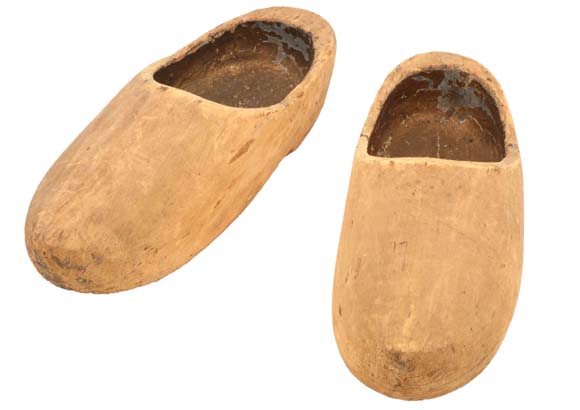
Backless Clogs


Poor little FRANKIE

Are spiritually aware parents really any better at parenting? CJ Stone advocates a few more cuffs around the ear...

http://hubpages.com/hub/Poor-Little-Frankie-the-limits-of-child-centred-education

Fake Fake


The art of FAKING it

Is the world rife with fakery? CJ Stone believes it is and that this has implications for your soul...

This a very stylish column this month. I’m wearing Armani jeans, a Nike top and Nike trainers. The top is white and fluffy with the Nike symbol on the breast; the trainers are a jazzy combination of black and silver with the logo in red; and the jeans are fashionably faded, with a silver Armani badge on the back pocket..

As it happens, they are all fake. Not unlike the writer, you might say. I got them as a job-lot from some friends of mine who have just returned from Romania. Romanians, like Italians, love their clothes, so I am told. But, unlike Italians, they are generally poor. Thus the need for fakery.

The shoes are passable, the top is warm, but the jeans – ah, the jeans! – are as good as anything that Armani could produce, with the added advantage that they were less than a quarter of the price. And in any case, were you to see me walking down the street in this gear, would you know the difference?

It’s the same with the writer. Slap a designer label on me, and how could you tell?

Some very great artists have been fakers, and some very great fakers have been artists. Picasso spent most of his life parodying other people’s styles. Now he has a car named after him. So what is the fake, and what is not? Picasso would certainly not have approved of the car, being, as he was a committed anti-capitalist all his life.

Arguably Picasso’s greatest work was also his greatest joke. He was, of course, the most well-known artist of his day, almost universally recognised, as prominent in world-consciousness as Einstein, say, or Muhammed Ali; so famous in fact, that any new Picasso production was immediately worth obscene and ridiculous amounts of money.

Unfortunately for the buyers of his later art, what they didn’t know was that he was also engaged in a frenzied process of over-production, creating so much art that he was almost single-handedly destroying the Picasso-market as he was creating it. When they opened up his Villa after his death it was literally filled, floor-to-ceiling, with Picasso etchings, making Picasso etchings almost valueless.

And that was the joke: Picasso faking Picassos in order to smash the Picasso brand.

Meanwhile there’s a copy of his great anti-war painting, Guernica, displayed in the hall of the United Nations. You may not know this, but Colin Powell, in his presentation to the General Assembly “proving” the existence of Weapons of Mass Destruction in Iraq, had the painting conveniently covered.

Why, you wonder? Because it’s message would certainly have rung out in the hall, showing the Secretary of State’s case for war for what it was: a fake.

We all remember that, of course: the computer-generated images of low flying planes spurting chemical gases, and mobile chemical weapons factories, that later turned out to be helium trucks, and him holding out a little bottle saying that if it was filled with Anthrax it could wipe out several American cities. Not that it was filled with Anthrax, but we ought to be told in any case

The world is full of fakery. Fake dossiers. Fake intelligence. Fake news. Fake elections. Fake democracies. Fake allies. Fake wars against fake enemies in which, unfortunately, real people really die. And then fake photo-ops for fake presidents on aircraft carriers anchored only a few miles from the American shore.

Even the famous scene in Baghdad where they brought down the statue of Saddam Hussein was a fake. Oh the event was real enough. What was fake was the crowd. The square was nearly empty, the “crowd” consisting of about 150 followers of Ahmed Chalabi, the Pentagon’s chosen successor to Saddam at the time, the whole scene created by the Hollywood technique of close-crop editing, and revealing more about US intentions than it did about the Iraqi people’s feelings.

The news is so severely spun these days that no one knows any more what is real and what is not. Sometimes you have to wonder where all of this will end.

Now I don’t want to end up sounding too political. The editor has already warned me not to discuss politics or religion in this column, but, as I’ve said before, I take political events to have a spiritual meaning. Because, to me, everything is connected.

So I want to try an experiment with you now. I want to prove the existence of the soul. Take a look at the magazine you are holding in your hands. It’s made of glossy paper. The page has my picture on it, and my name. These are my words you are reading. So where am I? I am right here, of course, here in the writing, not as ink or paper, or words upon a page, but as meaning.

So where is this “meaning”? Can you touch it? Can you measure it or weigh it? Does it have colour or texture or form? Can you bang it upon a table to make a loud and satisfying noise?

No. It is invisible. It has no material existence whatsoever. It is thought. It can be understood through material things, it expresses itself through material things, but it is not itself material.

And that is what I take the soul to be: it is the meaning of your life. Which is why all the world’s fakery at this moment is such an affront. It is an affront to the soul, to our collective sense of meaning.

As for my new designer gear: well it’s only the labels that are fake. The clothes themselves are perfectly stylish. I only hope that the same can be said of my writing.

The Meaning of Chavs


Chavs

Does the name “Chav” have a Romany origin or is it just street slang? CJ Stone picks through the prejudices to come to a surprising conclusion...


In a previous blog I wrote a story about my ex next door neighbour, the young alcoholic. In it I used the phrase: “a constant stream of tearaways in baseball caps stomping up and down the stairs”. Well I’m going to give you an insight into the editorial process now. In my submitted version of the column the word I used was “chavvies” not “tearaways”. The word was changed because our esteemed editor, Tania, had never heard it before. Then again, nor had I until my son used it - to describe those self-same tearaways in baseball caps who were stomping up and down my stairs at the time.

Since then the word has come into more general usage. There have been a string of high-profile articles in the national newspapers about the phenomenon, not least a half-page spread in the Evening Standard. “Chavs” and “chavvies” have emerged into the public consciousness at last.

Just to get this clear, chavs are a new youth group. You will have seen them about. They wear baseball caps, hooded tops, cheap jewellery and branded sportswear with – for some reason – their tracksuit bottoms tucked into their socks. Don’t ask me why they do this. Maybe it’s because most of them are so young that the only vehicles they are likely to possess are their BMX bikes. Obviously bicycle clips are not considered cool.

Meanwhile my local paper refers to the same group of youths under another set of names: as “yobs” and “louts” and “thugs”, which is partially true, and partially not. What is true is that it is kids who are dressed like this who are often responsible for acts of random vandalism and intimidation on our streets. What is not true is that all young people are engaged in such anti-social behaviour.

Kids just like to gather, don’t they? And when they do, older people always find them intimidating.

The first question is: where does the name come from? What, exactly, does “chav” mean?

I’ve heard a few possible explanations. According to my landlord, it’s an old London word, meaning something like “mucker” or “mate”, as in “me old chavvie mate”. In other words, the chavs are describing themselves as friends. Another possible explanation is that it derives from the Medway town of Chatham, meaning that the chavs were originally Chatham natives. I’m not sure what this implies. Perhaps it means that Chatham deserves the same recognition as Haight-Ashbury or Notting Hill Gate, as a place where revolutionary youth cults are born.

Personally I think that every place deserves its recognition on the map. Why not Chatham too?

However, the most convincing explanation I’ve heard is that it is a Romany word meaning “child”. In other words, the word “kid”, which I used earlier to describe the youth, is an exact translation. Also, they may be addressing each other affectionately as “our kid”, in the way that Brummies and Scousers do.

I have several reasons for inclining to this derivation. Firstly, because Romany words are so popular these days. “Pukka” and “kushti” are examples of this. Secondly, one of the other words for chavs is “pikey”, which is a clear Gypsy reference. Thirdly, I have it on good authority from a Gypsy friend of mine that the very style is Gypsy in origin. Go to any Gypsy site and you’ll see the youth dressed in exactly this way. They’ve been dressing like this for years, she tells me, and, having visited her on a number of occasions, and seeing her constantly expanding brood, I see no reason to disagree with her.

It is this last possibility which intrigues me the most. Why, you wonder, are the youth identifying themselves with Gypsies, a group which Trevor Phillips of the Commission for Racial Equality describes as “probably the single most discriminated-against group in this country"?

And they are discriminated against, let’s be clear on that, not because they are racially much different from the rest of us, but because they are culturally different: because they choose to live in a different way. You only have to read your local paper to understand the degree of hatred the settled community has for their Gypsy neighbours, and many people who would be very wary about using racial epithets against black people, say, or people of Asian origin, have no such scruples when it comes to talking about “gypos” or “dirty travellers”, ascribing stereotypes to the community that, in another context, would be considered decidedly racist.

What is going on? On the one hand you have a bunch of youths dressed up as Gypsies, saying “pukka” and “kushti” and calling each other “chav”; and on the other, a settled community reaching peaks of hysteria whenever Gypsies roll on to a piece of land nearby, while, at the same time, fearing their own youth.

Possibly it is a measure of the times. And what is certainly true is that while house prices spiral ever upwards, and rural life degenerates into a sort of super-suburbia - with townies buying up all the available real estate, while clogging up the roads with their off-road vehicles - it is the Gypsies and the youth who are losing out. Hence the identification maybe. Hence the fear.

I think it was Janice Joplin who sang “freedom’s just another word for nothing left to lose.” Maybe we should all take a little time to reflect on that.

Personally I believe that there is such a thing as psychic justice and that, consciously or otherwise, it is often the young who are the channels for it.

In other words, beware of what you hold on to. Sometimes it is the surest way of losing it.

Death of a Mod

Light as Bone

Bone the Mod’s tattoos told the tale of his life, but according to CJ Stone it was the light in his eyes that revealed so much more...

I am writing this column in honour of a friend of mine, Frank Plott, of Renfrew in Scotland, who died on the 23rd of September 2005.

I'd been travelling to and from Scotland at the time, as I was working on a project up there. I won't go into details here. Suffice it to say that it involved gang warfare, sectarianism, football and God (not necessarily in that order.)

Frank just happened to be in the house I was staying in. He was a little skinny guy, as slick as a whippet, with thick, jug-bottom glasses and a nervous leg-twitch, like the piston-shot of a sleek, fast automobile.

He suffered from bi-polar disorder: what used to be called manic depression. Every fortnight the nurse came to pick him up to take him to the hospital, where he was given an injection - or "jag" as he called it. He didn't know what was in the jag, though he suspected it might be Valium. Whatever it was, the consequence was that he spent most of his time asleep in his bed.

He was his mid-forties at the time of his death, and had had this illness since his late teens. He’d never worked in his life.

So far this might seem a dismal little tale. What has Frank Plott got to teach any of us?

Well a lot, actually.

Because inside of Frank Plott there lived another character, someone he called "Bone". And Bone was, by his own measure of things, The Greatest Mod In The World.

It’s all etched in ink in tattoos across his body: along his arms and his chest, and all over his hands. "Bone the Mod," says the tattooed script, "Dec. '82."

That's when he took up the faith, in December 1982. He was second-generation Mod, still keeping to the ancient path.

"St. Mirran," it says, "Mod party, 1983." St. Mirran were his Scottish football team. He also supported Everton. The Mod party was his 22nd birthday.

"Scooter," it says, "1983." That was his pride-and-joy, a Honda, an essential mark of status. Then, "Dorothy 1985," it says.

Dorothy was ten years older than him, a first-generation Mod from the sixties. It was a summer romance. In the end she killed herself, by throwing herself in front of a train.

Did he know why that was?

"I don't really know why that was," he answered, in his rich, melodic Scottish accent. "Depression. She was in hospital at the time, and they let her out for the day, and she walked to the train station and she flung herself in front of the train."

But those were always his girlfriends, the older women who'd seen the first wave go by. And Bone was always there, ten years later, to return them to the source.

"Mary," continues the tattoed script, "86." Another girlfriend, another original Mod. Then, "Brighton '87."

That was December 1987, just before Christmas. He lost all his money in the bookies. So he only had the prospect of a dismal New Year in front of him. No money. No food. Nothing but a half ounce of tobacco for comfort. And, being a Mod, he decided to go out check out the city that blazons like a beacon in the historical mythology. He hitch-hiked all the way there, in the depths of winter, and the journey took 19 frozen hours. He'd never even been out of Scotland before.

He ended up in hospital.

"I thought I was well, but I was nay well. The police picked me up and put me in an English hospital. That's where I met Janet Willers. She looked after me in hospital."

And sure enough, there it is on his hand, the record of an accidental meeting and a passing friendship in an English hospital all those years ago. "Janet Willers," it says. Just that, and no more.

After that he was flown back to Scotland, where he spent another two days in hospital, before he was finally discharged.

And so it goes, the story of a life told in cryptic notes in pin-pricked ink upon the pages of his skin, like the notes a novelist might make for himself, as a reminder of the plot. And that's exactly what it is. Frank Plott, weaving his own plot, as the story of his life, with a central character called Bone, who is The Greatest Mod In The World.

And, well, I'm talking to him in this council flat on a housing scheme in Scotland, listening to the story of his life - asking questions, noting down the details - as he rolls up his sleeves and lifts his shirt to show me his numerous tattoos. "Isabel Blaine," it says, "1990." She was Miss Paisley in 1965, and he was still with her, right until the time of his death. Then: "Freddie and the Dreamers 1992," and "The Merseybeats."

That's when I see it. It's like a light has come on inside of him. Talking about his life in this way has made him come alive. It beams from his face and from his eyes, like an angelic presence in his life: his own story, told to a new friend, as a narrative of pure meaning.

And I think, yes we all have this. However we name it, there is always a presence in our lives: another us, in a story of our own telling, as a light that lights the way. Despite the hardship and the loss and the occasional illness - the tragedy, the poverty, the grinding senselessness of a world that devalues our very existence - we all are creatures of light in the end.

How else do we learn but by listening? And how else do we know the value of ourselves but by valuing other people?

Frank Plott. RIP.

Weird Fate

Weird fate

Do we choose the lives we lead? Do you need a good fate in order to believe things are fated. CJ Stone investigates...

http://hubpages.com/hub/Weird-is-the-English-Word-for-Fate


Day One hundred and Thirty Eight


Pub palmistry.

CJ Stone meets a man in the pub who leads him to ponder the question of fate and the choices available to you...


I met him in a pub. I was drinking a pint, and generally keeping an eye on people, wondering what their stories were. There were four young people at the table next to me, enthralled by their own conversation, and, across the other side of the room, in a window seat, an old couple.

That's where he was, sitting with the old couple, reading the woman's palm. He had on a ripped, black tee-shirt, and black trousers tucked into motorcycle boots. His hair was long and tied back, and he had a bum-bag around his waist. He was drunk. I could tell by the way his eyes drooped, and his deliberate manner. It was as if he was trying desperately to hold things together. He was reading the woman's palm, stroking it lovingly. There were two pound coins on the table. This was obviously how he made his drinking money. When he'd finished, the woman added another pound from her purse. He shook hands with both of them, but held the woman back as she was about to follow her husband out of the pub. He gave her a conspiratorial kiss, and whispered in her ear. He was acting like a gigolo. I couldn't keep my eyes off the scene. He noticed me looking, and laughed. I guess there was amusement in my eyes too. He came over to talk to me.

We had a brief initial conversation about work and such things and then I asked him to read my palm. I mean: I'm fascinated by all that. I wanted him to read my palm so I could get an insight into his thoughts.

He said, "when you were young you were a loving son, but your Mom and Dad split up at an early age."

"No they didn't," I told him. "They're still together."

"Something happened. Maybe they didn't split up. Maybe they just talked about it. You were a baby, so you wouldn't know. Anyway, ever since then you've been losing heart. I mean, you've been getting depressed."

This is the stuff of palmistry, I realised: vagaries laced with approximations. There was a certain amount of truth in what he told me, and a certain amount of fishing for information. He told me that I'd had a failed affair, and hadn't got over it yet, which was true. He looked at the lines on my face and said, "you worry a lot." This is also true, though it doesn't take much to see it. I had a newspaper open in front of me. I wanted to say, "that's what worries me, that we live in such a dangerous and messed up world." All the time I was thinking, "come on, come on, tell me something real." I think he sensed my scepticism. He stopped suddenly and said, "I can't tell you any more."

"Why not?" I asked.

"I daren't."

"Oh go on," I said, "tell me."

"Oh all right then. How can I put this diplomatically? I can see murder in your hands. You’re going to murder someone."

Well I laughed at that. What else could I do? It was like a line from some bad Gothic novel. It's a good job I'm fairly strong minded, fairly certain about myself and my role in life. I said, "that's not true."

"It is true," he said. "You've wanted to murder someone, or you're going to murder someone, or you've thought about it. You've dreamed about it, haven't you?"

He was still trying to make his descriptions fit the facts.

At this point a group of people came in and sat at a nearby table. "Oi you!" he called out, but they ignored him. He turned to me. "Those people were in the Dog and Duck last night.”

I think he was trying to distract me from his failed palm-reading attempt.
But all this had me reflecting. I was thinking about palmistry. The problem with it - aside from the fact that this guy couldn’t do it - is that it creates a concept of the world based on the individual self. It occupies the safe ground of the purely personal. It says that fate is written in the palm rather than in the world. It doesn't tell you how you can change your fate or how you can change the world. It offers you no choices. It says, this is your life, here in the palm of your hand. This is how long you will live. This is your health, and these are your motivations. It doesn’t tell you about the world and its motivations, nor how these might reflect upon you. It creates an image of the world as made up of isolated individuals.

Me: I prefer to think that my fate is in my heart, rather than in my hand, and that I am part of a process created by us all collectively as well as individually. I prefer to think that it’s what we do that matters, rather than what some crumpled lines tell us, that we all count for something in each other’s lives, and that we are not alone.

Afterwards he asked me: “what star-sign are you?

“Guess,” I said.

“Let me see,” he said. “Taurus?”

“No.”

“Aries?"

“No.”

“Sagittarius? Cancer? I'll probably slap myself when I find out."

"I'm a writer, and I have a split personality," I told him, trying to put him out of his misery.

"Ah: Pisces."

"No."

"I can't work it out. Go on, tell me."

"I'll leave you to it," I said, "I' m going to get a drink. By the way," I added, "you were right, I am a murderer. I could murder a pint right now..."

Avoiding Spam


Avoiding spam

CJ Stone spent the month dealing with minor disaster, not least of which was having an alcoholic moving in upstairs.

It's been a strange month. First of all my toilet got blocked. Then my computer crashed. Then the Inland Revenue started chasing me up for money I didn't even know I owed.

In the case of the Inland Revenue, this all turned out to be a clerical error. Someone had made a mistake in transcribing my tax returns, placing one figure in a box where it wasn't supposed to be. In the case of my blocked toilet it was all down to a friend of mine with an unusual fetish for using inordinate amounts of toilet paper. In the case of my computer it was a little negative worm that had been lurking around on the internet, and which insinuated itself into my filing system and then began eating it away from the inside.

Do you believe that sometimes physical effects can have a psychic source? Sigmund Freud did. He called it parapraxis. He was the only psychoanalyst ever to have analysed himself, which, if you stop to think about it, must have been a very dodgy procedure. I mean, how can you ever be objective about yourself? In Sigmund Freud's case, it meant that the entire system of psychoanalysis he developed from it was riddled with his own neuroses, which probably explains why most of the time it doesn't work.

So I guess if I was Sigmund Freud I'd probably want to say that my blocked toilet represented some mental blockage, or that the money I appeared to owe had something to do with something I owed to myself. As for the negative worm, I already know where that came from.

It was from my upstairs neighbour, recently removed.

I'm being metaphorical here. I don't really think that my upstairs neighbour had anything to do with a rogue virus I picked up from the internet. But the notion of a negative worm eating away at your delicate software is so apt for him, that I just thought I'd blame him for it in any case.

He was - is - an alcoholic. Now, I'm a bit of an alcoholic myself. But, then, I'm fifty-one years old. I've been practicing for it for the better part of my adult life. This guy is only twenty-six, and that takes real commitment. And even after over thirty-five years of dedicated self-medication, I still don't wake up shaking, desperate for a drink. Nor would I go stealing bottles of wine from the Indian supermarket across the road. As I said to him at the time, shoplifting is reprehensible and immoral, not to say illegal. But shoplifting from the shop across the road where you also buy your milk and vegetables is just plain stupid. Needless to say he was banned and was forced into further and further forays into the unknown find the source of the White Lighting cider that was the only thing that would stop him shaking in the morning.

But Spam was such a nice young man. When he wasn't drinking, that is. He was polite and respectable, and, when he first moved into the flat, he had a job and a girlfriend and money in his pocket, and almost everything you could want, barring regular conversations with God.

I'm afraid it was me who started him on this latest rampage. He'd been dry for about six months, living with his girlfriend's parents. And he knocked on my door, asking if I'd got a spare cigarette, which I had. And, being the nice neighbour that I am, him being alone up there, without any furniture as yet, I invited him in and offered him a beer. It's not often that I drink beer in the day. It was just one of those days. And he drank his beer and thanked me for it, and - without me knowing anything that had gone on before - spent the next six weeks on a glorious bender; by which time he'd lost his job, lost his girlfriend and, eventually, lost his flat.

I can't say I miss him. I feel sorry for him. But there's only so much you can do with a person who has a negative worm on their insides eating up all of their delicate software. It was like living next door to a soap-opera. Every day something would happen. So there were visits from the police, fights, tears, vows of abstinence that would immediately be reversed, a constant stream of chavvies in baseball caps stomping up and down the stairs, visits from the bailiffs, worried phone-calls from the landlord, non-stop hysteria.

I said: "Spam, you're a walking disaster-area." I said, "I don't even watch the soaps on the telly, let alone having to live next door to one."

Where does this form of psychology come from? In the end, the landlord paid him to go away. He pocketed £260, walked off down the road, turned up on my doorstep two hours later with a mate of his, having spent £50 on a pair of trainers, £15 on a haircut, £50 on a mobile phone, £30 on a slap-up meal, and the rest on drink. I mean, who on earth, on finding himself homeless, thinks that the best thing you can do with your money is to cut your hair and buy a pair of trainers? Later that night there was a phone-call from a nurse. Could I tell Spam's mum that he was in hospital, but not to worry, he was all right.

He’d managed to get into a fight and get himself beaten up.

What else can I say? Spam’s mum said, "tell Spam I love him, but I don't like him anymore."

Me, I was just glad to have a quiet house again..